
The Benefits of Robotic-Assisted Knee Replacement: Precision Surgery for Faster Recovery and Longer-Lasting Results

Knee replacement surgery has evolved significantly over the last two decades. What was once a highly manual, surgeon-dependent procedure has now entered an era of data-driven precision through robotic-assisted knee replacement. This advancement has transformed outcomes for patients suffering from severe knee arthritis, deformities, and long-standing joint damage.
Synopsis
What Is Robotic-Assisted Knee Replacement?
Robotic-assisted knee replacement is an advanced surgical technique where a computer-guided robotic system assists the surgeon in planning and executing the procedure with extreme precision. Before surgery, detailed imaging (CT scan or 3D mapping) of the patient's knee is used to create a personalized virtual model of the joint. This allows the surgeon to plan:
- Exact bone cuts
- Ideal implant size and alignment
- Soft-tissue balance
- Optimal positioning based on the patient's anatomy
During surgery, the robotic system provides real-time feedback and guidance, ensuring bone preparation and implant placement match the pre-planned strategy within millimeter accuracy.
How Robotic Knee Replacement Is Superior to Conventional Techniques
Traditional knee replacement relies heavily on manual instruments and visual estimation, which can introduce variability. Robotic assistance addresses these limitations.
- Superior Accuracy and Alignment
- Personalized Surgery
- Better Soft-Tissue Balance
- Reduced Surgical Trauma
.jpeg)
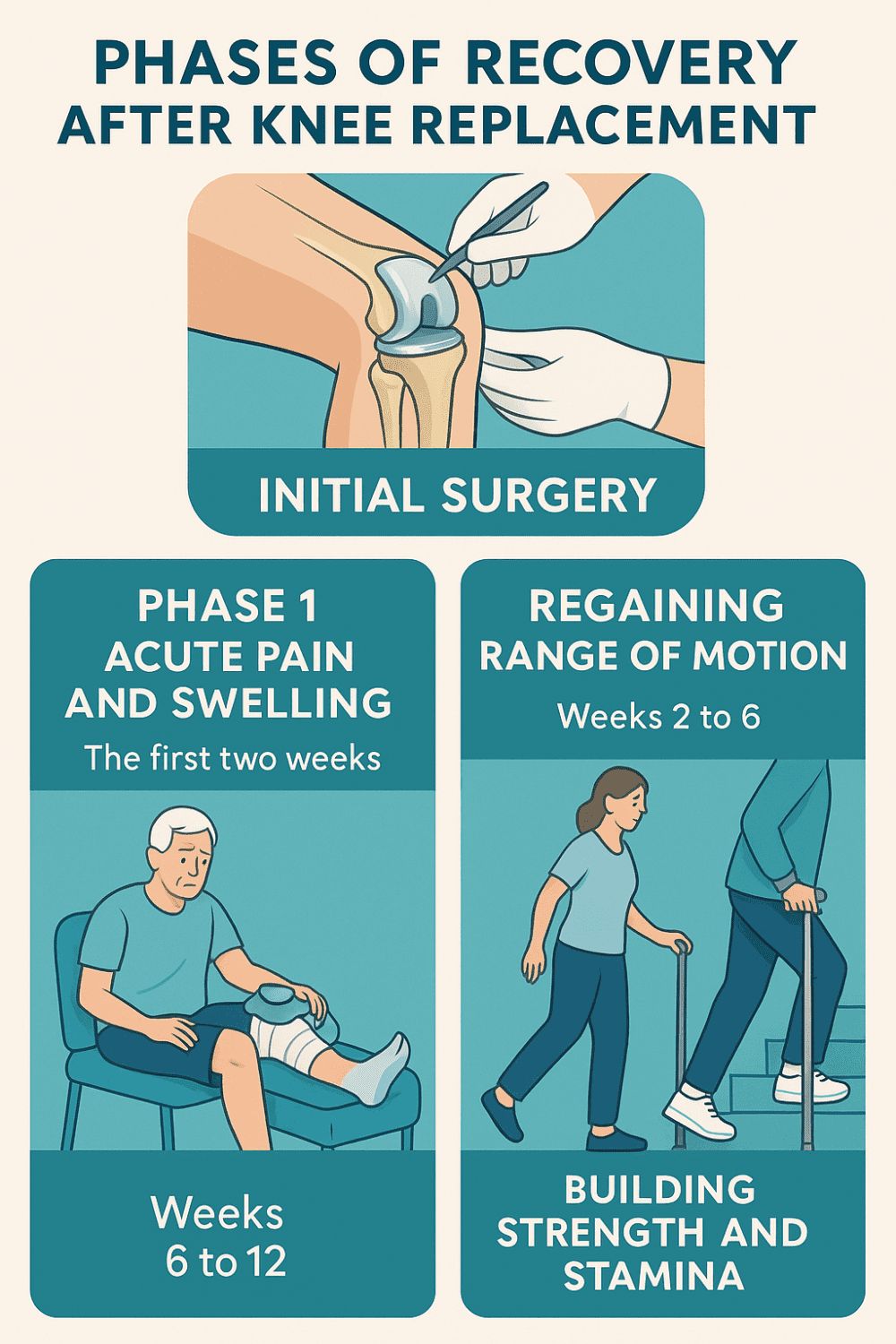
Recovery Timeline: Robotic vs Traditional Knee Replacement
One of the most significant advantages of robotic-assisted knee replacement is enhanced recovery.
Typical Recovery Milestones (Robotic-Assisted)
- Day 1 - 2: Standing and walking with support
- 1 - 2 Weeks: Reduced pain, improved knee bending
- 3 - 4 Weeks: Walking with minimal or no support
- 6 Weeks: Return to most daily activities
- 3 Months: Near-normal function for most patients
Who Is an Ideal Candidate for Robotic Knee Replacement?
Robotic-assisted knee replacement is suitable for a wide range of patients, including:
- Individuals with advanced knee arthritis
- Patients with knee deformities (bow-legged or knock-knee)
- Active individuals seeking long-lasting results
- Patients who want quicker recovery and better knee function
Why Surgical Expertise Still Matters
While robotic technology enhances precision, outcomes ultimately depend on the surgeon's skill and experience. Choosing a surgeon trained in robotic systems and knee reconstruction is crucial for maximizing benefits.
Frequently Asked Questions
Find quick answers to the most common questions our customers ask.
It is an advanced surgical technique where a robotic system assists the surgeon in performing knee replacement with greater precision and customization.
The robotic system ensures precise bone cuts, ideal implant positioning, and soft-tissue balancing with millimeter accuracy.
Yes, it offers superior accuracy, personalized surgery, better soft-tissue balance, and faster recovery compared to conventional techniques.
Most patients can return to normal activities within 6 weeks, with significant improvements seen by 3 months.
Individuals with advanced knee arthritis, knee deformities, or those seeking long-lasting results with a quicker recovery time are ideal candidates.