
An anterior cruciate ligament (ACL) injury is one of
the most serious knee injuries seen in athletes and
physically active individuals. Sports that involve
sudden stopping, pivoting, jumping, or rapid
direction changes - such as football, basketball,
badminton, cricket, and skiing - place immense stress
on the ACL.
When the ligament is torn, choosing the right
treatment is crucial not only for healing but also
for restoring knee stability, athletic performance,
and long-term joint health. Today, most athletes and
sports medicine specialists strongly prefer ACL
reconstruction surgery over traditional ACL repair
due to its proven reliability and predictable
outcomes.
ACL Repair vs ACL Reconstruction: What's the
Difference?
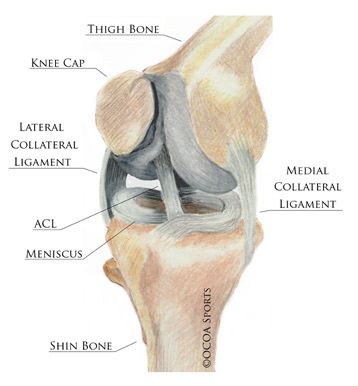
Traditional ACL repair involves stitching the torn
ligament back to its original attachment. This
technique relies on the ligament's natural healing
capacity. However, the ACL has a limited blood
supply, which makes natural healing unreliable and
often incomplete - especially in active
individuals.
ACL reconstruction, on the other hand, replaces the
damaged ligament with a graft. This graft is usually
taken from the patient's own hamstring tendon,
patellar tendon, or quadriceps tendon, or in some
cases from a donor (allograft). Over time, the graft
integrates with the knee and functions as a new,
strong ligament - offering superior stability and
durability.
1. Better Knee Stability for High-Demand
Sports
Athletes expose their knees to extreme rotational
and forward-backward forces. A repaired ACL often
cannot withstand these stresses during cutting,
pivoting, or jumping movements.
ACL reconstruction provides significantly better
mechanical stability, making it the preferred ACL
surgery for athletes who want to safely return to
competitive or recreational sports.
2. Lower Risk of Re-Injury
Studies show that traditional ACL repair carries a
higher risk of failure in active individuals.
Recurrent instability can lead to repeat ligament
tears and prolonged time away from sport.
With proper surgical technique and structured
rehabilitation, ACL reconstruction significantly
reduces the risk of re-tear, allowing athletes to
return to sport with greater confidence.
3. Improved Long-Term Knee Health
Ongoing knee instability increases the risk of
secondary injuries such as meniscus tears, cartilage
damage, and early knee arthritis.
ACL reconstruction restores normal knee biomechanics
more effectively, helping protect the joint from
further internal damage and preserving long-term
knee function - especially important for young
athletes.
4. Predictable Rehabilitation and Return to
Sports
One of the major advantages of ACL reconstruction is
its well-defined rehabilitation protocol. Recovery
typically includes:
- Early mobilization
- Progressive muscle strengthening
- Balance and proprioception training
- Sport-specific conditioning
Most athletes return to sports within 6 to 9 months, depending on healing and sport intensity. Traditional repair techniques lack such predictable recovery timelines.
5. Advances in Arthroscopic ACL Surgery
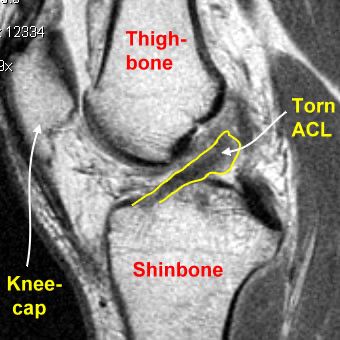
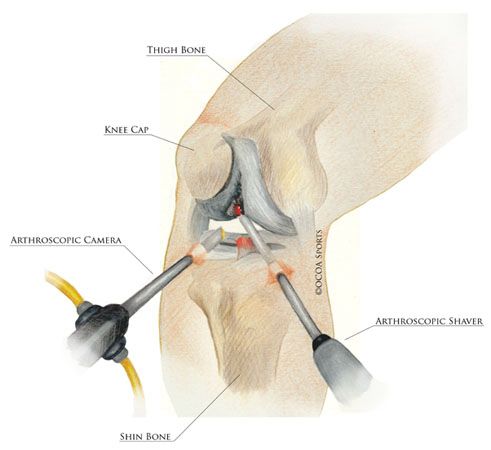
Modern ACL reconstruction surgery is performed using
minimally invasive arthroscopic techniques. These
advances allow:
- Precise graft placement
- Minimal tissue damage
- Reduced post-operative pain
- Faster recovery
Surgical techniques can also be customized to suit the patient's anatomy, sport, and activity level - leading to better functional outcomes.
When Is ACL Repair Still an Option?
Traditional ACL repair may be considered in select
cases where:
- The tear is very recent
- The ligament has cleanly detached from the bone
- The patient has low physical activity demands
However, for most athletes and active individuals, ACL reconstruction remains the gold-standard treatment.
Frequently Asked Questions About ACL Surgery
Can I return to sports after ACL surgery?
Yes. Light activities like walking can begin within
weeks. Most patients return to contact or
high-impact sports between 3 to 6 months, depending
on recovery and rehabilitation progress.
Will I need to wear a knee brace?
In some cases, a knee brace or splint may be used
temporarily to protect the graft during early
recovery.
What type of graft is used in ACL
reconstruction?
ACL reconstruction uses either:
- Autograft (tissue from your own body), or
- Allograft (donor tissue)
Your surgeon will recommend the best option based on age, activity level, and injury pattern.
How big are the scars?
ACL surgery involves three small arthroscopic
incisions, usually about the size of a buttonhole.
Can an ACL tear be repaired instead of
reconstructed?
In most adults, a torn ACL cannot be reliably
stitched back together. Therefore, reconstruction
using a graft is the standard and most successful
approach.
When can I put weight on my leg?
Most patients can bear weight within 24 hours after
surgery, gradually increasing as advised by the
surgeon and physiotherapist.
How much time off work is needed?
Recovery time depends on your job:
- Desk jobs: a few days
- Physically demanding jobs: several weeks to months
What is the success rate of ACL
reconstruction?
Modern ACL reconstruction has a 90 - 95% success rate,
with most patients returning to full sporting and
daily activities.
What happens if I don't undergo surgery?
For young and active individuals, avoiding surgery
can lead to ongoing instability, repeated injuries,
and early arthritis. ACL reconstruction helps
prevent long-term complications.
Is physiotherapy required after ACL reconstruction?
Yes. Structured physiotherapy is essential after ACL reconstruction to restore knee motion, rebuild strength, improve balance, and guide a safe return to sports.
Conclusion
For athletes and physically active individuals, an
ACL injury is about more than healing - it's about
regaining performance, confidence, and long-term
knee health. While traditional ACL repair preserves
the native ligament, it often fails to meet the
demands of high-intensity activity.
ACL reconstruction offers superior stability, lower
re-injury risk, predictable recovery, and better
long-term protection, making it the preferred choice
in modern sports medicine.
For accurate diagnosis and advanced arthroscopic ACL
reconstruction surgery in Bengaluru, consult Dr
Pradyumna, Orthopaedic and Sports Injury Specialist.
He offers comprehensive evaluation, evidence-based
surgical techniques, and structured rehabilitation
planning to restore knee stability and function.
Book an appointment:
+91-9113025188