Advanced Arthroscopic ACL Reconstruction Surgery in Bangalore
Advanced Surgical Approaches: Tailored for Faster Recovery
We do not believe in a one-size-fits-all approach. Dr. Pradyumna utilizes cutting-edge arthroscopic variants designed to match your specific lifestyle, age, and athletic demands.
Anatomic ACL Reconstruction: Unlike traditional techniques, we place your new graft into the exact native anatomical footprint of your original ligament. This restores absolute rotational stability, minimizing the risk of future graft failure.
All-Inside ACL Reconstruction: An ultra-modern, minimally invasive keyhole approach that preserves bone. By using specialized constructs, it significantly reduces post-operative pain and supports a faster hospital discharge.
Personalized Graft Selection & Internal Bracing: Depending on your sport, we choose the safest, strongest graft whether a Hamstring Tendon Autograft, Peroneus Longus, or Quadriceps Tendon. For high-impact athletes, we offer Internal Brace Augmentation (FiberTape) to safeguard the healing graft during early rehabilitation.

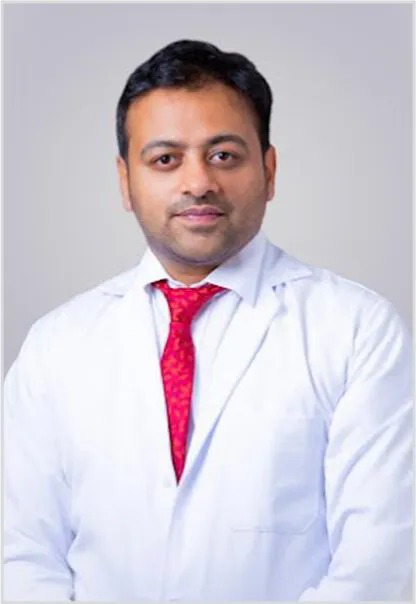
Regain absolute knee stability, eliminate pain, and return safely to sports. Tailored keyhole ligament repair by Dr. Pradyumna R, Fellowship-Trained Sports Medicine Specialist & Consultant at Manipal Hospitals.
Book Clinic Appointment at BTM Layout
Have You Suffered an ACL Tear? Spotting the Red Flags
An Anterior Cruciate Ligament (ACL) injury is incredibly common among athletes and active individuals across Bangalore playing badminton, football, or cricket. Early and precise diagnostic identification prevents long-term cartilage wear.
Common Signs of a Complete ACL Tear:
- The Pop: Hearing or feeling a distinct loud snap inside the knee during a sudden twist or jump.
- Rapid Swelling: Acute swelling that surfaces within 2 hours of the trauma.
- Knee Instability: A persistent feeling of your knee giving way or shifting while walking, turning, or climbing stairs.
Our Precision Diagnostic Protocol: Beyond reviewing your MRI scan, Dr. Pradyumna performs specific clinical stress tests right at our Bangalore clinic including the Lachman Test and Pivot Shift Test to accurately evaluate the grade of your knee instability before recommending treatment.
Addressing Complex Knee Trauma: Combined Ligament & Meniscus Injuries
Over 50% of sports-driven ACL tears do not occur in isolation. They are frequently accompanied by secondary joint injuries that require concurrent attention to fully fix the knee.
ACL Reconstruction with Meniscus Repair: If you have a concomitant meniscus tear, we prioritize joint preservation. Using advanced inside-out or all-inside suturing configurations, Dr. Pradyumna repairs the meniscus during the same keyhole session to protect against early osteoarthritis.
Multi-Ligament Knee Reconstruction: Severe high-energy rotational impacts or dashboard vehicular accidents can tear multiple structural bands at once. Our surgical center handles complex multi-ligament procedures, dynamically combining ACL + PCL Reconstruction or stabilizing MCL/LCL tears in single-stage or planned dual-stage arthroscopic settings.
Your Step-by-Step Journey to Running Again
True success in ligament surgery relies heavily on structured physical therapy. We integrate specialized Prehabilitation (Prehab) to lower swelling and build quad strength before your surgery, laying a superior foundation for post-op recovery.
- Phase 1: Prehab & Immediate Post-Op: Weeks 0 - 2. Focus on active swelling reduction and safe, supported walking. Stitches are cleanly removed at day 14.
- Phase 2: Progressive Range of Motion: Weeks 2 - 6. Structured physiotherapy to safely achieve full extension and progress to 120° of knee flexion while discarding crutches.
- Phase 3: Intensive Muscle Strengthening: Months 2 - 4. Dedicated closed-chain quadriceps, hamstring, and gluteal conditioning. Introduction of low-impact stationary cycling.
- Phase 4: Agility Drills & Return to Play: Months 6 - 9. Advanced sports-specific training, straight-line jogging, and progressive cutting drills culminating in safe discharge back to competitive sports.
Transparent Financial Guidance & Hospital Networks
We believe in full financial clarity with no hidden charges. Dr. Pradyumna operates across Bangalore's premier, state-of-the-art medical networks, ensuring you receive world-class care at your preferred institutional facility.
Premium Institutional Placement: Patients can choose to undergo their procedure under Dr. Pradyumna's direct care at Manipal Hospitals (Kanakapura Road / Jayanagar), combining personalized specialist care with top-tier corporate hospital infrastructure.
| Financial Feature | Coverage Matrix |
|---|---|
| Average Cost Structure | Transparent, predictable budgeting discussed upfront based on your implant tier such as Endobutton and interference screws. |
| Flexible Payment Ecosystem | 0% interest EMI options available to comfortably manage out-of-pocket medical investments. |
| Insurance Support | Cashless support and documentation guidance for eligible plans across partner hospital networks. |
Centrally Located Care Serving South Bangalore
Our primary consultation clinic (Bangalore Orthopaedic Clinic) is strategically situated in BTM Layout, offering easily accessible, top-tier diagnostic care and routine follow-up checkups for residential neighborhoods across the region.
BTM Layout & Mico Layout: Located behind MedPlus ( BTM Layout 2nd Stage ) with accessible parking and modern clinical equipment.
Surrounding Neighborhood Captures: Proudly serving patients looking for trusted knee and ligament care across Jayanagar, JP Nagar, Banashankari, Padmanabhanagar, and Kanakapura Road.
1. What Is an ACL Tear?
The Anterior Cruciate Ligament (ACL) is one of the four major ligaments that stabilize the knee joint. It connects the thigh bone (femur) to the shin bone (tibia) and plays an essential role in controlling forward movement and rotational stability of the knee.
An ACL tear usually occurs during sudden twisting movements, awkward landings after jumping, rapid changes in direction, or direct impact to the knee. It is one of the most common sports injuries among football players, cricketers, badminton players, basketball players, runners, and fitness enthusiasts across Bangalore.
Depending on the severity, ACL injuries are classified into three distinct categories:
- Grade I: Mild ligament stretching with microscopic tearing; the joint remains stable.
- Grade II: Partial ACL tear with macroscopic stretching; mild to moderate joint looseness is present.
- Grade III: Complete ACL rupture; total structural separation resulting in severe knee instability.
While some partial tears can be treated successfully without surgery, complete ACL tears in active individuals often require arthroscopic ACL reconstruction to restore knee stability and allow a safe return to sports and daily activities.
2. When Should You Consult an Orthopaedic Surgeon for an ACL Injury?
You should seek a specialist medical evaluation if you experience any of these key warning signs:
- A distinct popping or snapping sensation inside the knee at the exact moment of injury.
- Rapid knee swelling that develops within 2 hours of the trauma.
- Knee instability or a persistent feeling of your joint giving way while walking.
- Difficulty or sharp pain when changing directions or turning.
- Deep pain while playing sports or exercising.
- Your knee giving way repeatedly during routine movements.
- Difficulty or instability while climbing stairs.
- An MRI report explicitly showing an ACL tear.
- Persistent knee pain or looseness despite undergoing regular physiotherapy.
Early diagnosis by a specialist helps prevent additional wear and tear to the meniscus, protective cartilage, and surrounding knee ligaments.
3. Who Is a Good Candidate for ACL Reconstruction Surgery?
ACL reconstruction is commonly recommended for:
- Professional athletes returning to competitive, high-impact cutting sports.
- Recreational sports players (badminton, football, cricket) who need full rotatory stability.
- Young, active adults who want to maintain an agile, dynamic lifestyle.
- Individuals diagnosed with complete Grade III ACL tears.
- Patients suffering from recurrent knee instability during normal daily activities.
- People with complex combined injuries, such as an ACL tear associated with a meniscus tear.
- Patients whose daily occupations require extensive climbing, heavy lifting, squatting, or physical labor.
Not every ACL injury requires surgery. Patients with low physical activity levels or stable partial tears can often benefit from non-surgical options like physiotherapy, bracing, and supervised rehabilitation.
4. How Is an ACL Tear Diagnosed?
Dr. Pradyumna performs a comprehensive clinical assessment before recommending any surgical treatment. A precise diagnosis includes:
- Detailed Medical History: Reviewing the exact mechanism of your injury.
- Physical Examination: Evaluating the knee's current range of motion and swelling.
- Lachman Test: The gold-standard clinical stress test to measure forward translational laxity of the tibia.
- Pivot Shift Test: Used to replicate and assess rotational instability under a twisting load.
- Anterior Drawer Test: Performed at 90 degrees of knee flexion to evaluate joint displacement.
- High-Resolution MRI Scan: Used to confirm the tear grade and identify bone bruises or secondary injuries.
- Digital X-rays: Performed to rule out associated bony avulsions or fractures.
- Associated Injury Assessment: Evaluating potential concurrent damage to the meniscus or joint cartilage.
Your treatment plan is customized based on your injury severity, daily activity level, age, and future physical goals.
5. Can an ACL Tear Heal Without Surgery?
Not all ACL injuries require immediate surgery. Non-surgical conservative treatment may be appropriate for:
- Stable, low-grade partial ACL tears where the remaining fibers keep the joint steady.
- Individuals with low physical activity demands.
- Patients who do not experience functional knee instability during daily movements.
- Older adults who do not participate in high-impact pivoting or cutting sports.
Conservative treatment protocols include:
- Structured Physiotherapy: Focusing on intense hamstring and quadriceps strengthening to compensate for the ligament.
- Knee Bracing: Using a functional brace to protect the joint during early healing phases.
- Targeted Strengthening Exercises: Improving core hip and lower-limb biomechanics.
- Activity Modification: Swapping high-impact cutting sports for straight-line activities like cycling or swimming.
- Pain & Swelling Management: Using targeted medications or regenerative therapies (like PRP) to stimulate localized blood flow.
However, active individuals with complete ACL tears often benefit most from arthroscopic ACL reconstruction to restore full stability and minimize the long-term risk of early meniscus or cartilage damage.
6. Benefits of Arthroscopic ACL Reconstruction
Compared with leaving chronic ACL instability untreated, undergoing timely arthroscopic reconstruction offers several key advantages:
- Restores complete translational and rotational knee stability.
- Helps you return to competitive or recreational sports safely.
- Eliminates unpredictable episodes of the knee giving way or shifting.
- Protects the shock-absorbing meniscus and joint cartilage from secondary tears.
- Improves your mental confidence during daily walking and physical activities.
- Supports long-term joint health and protects against early knee osteoarthritis.
- Performed through minimally invasive arthroscopy using tiny keyhole incisions.
- Results in significantly smaller scars, less tissue trauma, and less post-operative pain.
- Allows for an accelerated rehabilitation pathway compared with traditional open knee surgery.
7. Risks and Possible Complications of ACL Reconstruction
Arthroscopic ACL reconstruction is a routine procedure with a high success rate exceeding 90-95% when combined with proper physical therapy. However, like any surgical procedure, there are potential risks to be aware of, including:
- Knee Stiffness (Arthrofibrosis): Can happen if early range-of-motion exercises are delayed.
- Graft Failure or Re-tear: Usually caused by secondary trauma or returning to cutting sports before the graft is fully fused.
- Persistent Swelling or Infection: Mitigated through sterile surgical environments and post-op care.
- Blood Clots (Deep Vein Thrombosis - DVT): Prevented by encouraging early mobilization right after surgery.
- Temporary Numbness: Mild numbness around the keyhole incisions due to tiny superficial skin nerves, which typically fades.
- Bleeding or Anaesthesia-Related Complications: Standard risks managed by the hospital's care team.
Strictly following your rehabilitation protocols and attending scheduled follow-up appointments helps minimize these risks.
8. Why Choose Dr. Pradyumna for ACL Reconstruction in Bangalore?
Patients choose Dr. Pradyumna R because of his deep expertise and commitment to personalized, evidence-based orthopedic care:
- Fellowship-Trained Orthopaedic Surgeon: Completed advanced specialization in Arthroscopy and Joint Replacement at the prestigious Technical University of Munich (TUM), Germany.
- 15+ Years of Clinical Excellence: Highly experienced in managing complex sports medicine and joint reconstructions.
- Proven Surgical Volume: Successfully performed 5,000+ orthopedic surgeries and treated over 20,000+ happy patients.
- Sports Medicine Specialist: Expert in treating both professional and recreational athletes across Bangalore with tailored recovery tracks.
- Personalized Rehabilitation Planning: Designing custom prehab and post-op protocols matched to your specific lifestyle.
- Premium Institutional Care: Direct consultant OPD access and surgical treatment at Manipal Hospitals (Kanakapura Road and Jayanagar campuses).
- Multilingual Support: Converses fluently in English, Kannada, Hindi, Telugu, and Tamil for clear communication.
9. Return to Sports Timeline Table
| Recovery Stage | Expected Timeline | Rehabilitation & Functional Focus |
|---|---|---|
| Walking with support | Within 1-2 Days | Early post-op mobilization using a protective brace and elbow crutches. |
| Walking without crutches | 2-4 Weeks | Progressive full weight-bearing; achieving full knee extension and 90° flexion. |
| Return to Office work | 2-6 Weeks | Dependent on daily comfort, swelling levels, and commuting demands. |
| Stationary Cycling | Around 8 Weeks | Low-impact closed-chain conditioning to build quadriceps endurance. |
| Light Straight-Line Jogging | Around 3-4 Months | Introduction of controlled impact loading; intensive hamstring conditioning. |
| Agility & Cutting Drills | Around 5-6 Months | Advanced sports-specific coordination and multi-directional agility drills. |
| Competitive Sports Return | Usually 6-9 Months | Permitted only after functional testing confirms >90% limb strength symmetry. |