Total Knee Replacement Surgery in Bangalore: Walk Pain-Free Again
Introduction: Reclaim Your Life from Chronic Pain
There is a particular kind of exhaustion that comes with chronic knee pain. It is not just the ache it is the moments it takes from you: a morning walk in Cubbon Park, climbing stairs without wincing, or sitting through a family wedding.
If severe osteoarthritis or joint damage has made these moments feel out of reach, Total Knee Replacement (TKR) surgery with Dr. Pradyumna is the turning point you need. As a leading orthopaedic surgeon in Bangalore, Dr. Pradyumna combines surgical precision with a patient-centered approach to restore your mobility and independence.

What is Total Knee Replacement (TKR)?
Total knee replacement or total knee arthroplasty is a procedure where damaged joint surfaces are replaced with biocompatible artificial components.
- The Process: We remove the worn-out cartilage and a thin layer of bone from the femur and tibia.
- The Solution: High-grade metal and medical-grade polyethylene (plastic) spacers are inserted to create a smooth, gliding surface.
- The Goal: To replicate the natural movement of your knee, providing a stable, pain-free joint that lasts 15 to 25 years.
Why Choose Dr. Pradyumna for Your Surgery?
In a city with many corporate hospitals, Dr. Pradyumna offers a unique blend of high-tech precision and personalized care:
- Fellowship Trained: Specialized expertise in Primary and Revision Joint Replacement.
- High-Flexion Implants: We use High-Flex designs specifically for Indian patients who wish to maintain the ability to sit cross-legged or squat when necessary.
- Minimally Invasive Techniques: Smaller incisions lead to less blood loss, less scarring, and a faster return to home.
- Dedicated Rehabilitation: We don't just perform surgery; we coordinate your entire physiotherapy journey.
Advanced Technology: Computer-Assisted Precision
The Gap-Closer: While many centers offer traditional surgery, Dr. Pradyumna utilizes Computer-Assisted Navigation to ensure your implant is aligned with sub-millimeter accuracy.
By creating a digital map of your unique anatomy during surgery, we ensure:
- Perfect Alignment: Reducing uneven wear and tear on the new joint.
- Soft Tissue Balance: Ensuring the knee feels natural and stable while walking.
- Longer Implant Life: Precision placement is the #1 factor in making a knee replacement last for decades.
Recovery Timeline: Your Journey Back to Mobility
Most of our Bangalore patients are surprised at how quickly they return to their routine.
| Timeframe | Milestone |
|---|---|
| Day 1 | Standing and taking first steps with a walker. |
| Day 3-5 | Discharge from hospital; climbing a few stairs. |
| Week 2-4 | Walking indoors without support; wound healing. |
| Week 6 | Returning to driving (automatic cars) and light office work. |
| 3-6 Months | Full return to active life, including trekking and long-distance travel. |
Cost, Insurance, and Transparency
We understand that financial planning is a vital part of your healthcare journey. Dr. Pradyumna's clinic provides:
- Transparent Pricing: Clear breakdowns of hospital stay, surgeon fees, and implant costs.
- Insurance Support: Assistance with Cashless TPA claims and reimbursement for all major private and corporate insurance providers.
- Implant Choices: Options ranging from standard Cobalt-Chrome to advanced Oxinium (Gold Knee) for younger or highly active patients.
Frequently Asked Questions (FAQ)
1. Is Robotic-Assisted Surgery better than conventional surgery?
While both are effective, Robotic-assisted surgery provides sub-millimeter precision in bone cutting. For my patients, this translates to less tissue trauma, a more "natural" feel to the new knee, and often a faster return to daily activities.
2. What is the total cost of Knee Replacement in Bangalore?
The cost typically ranges from ₹1.8L to ₹3.5L per knee, depending on the choice of implant (Cobalt-Chrome vs. Oxinium) and the hospital room category. We provide a transparent breakdown during your first consultation to help you plan without surprises.
3. Will I be able to use an Indian toilet or sit cross-legged after surgery?
Yes, by using High-Flexion (High-Flex) implants and specialized physiotherapy, many patients can achieve the 130-150 degrees of motion required for these activities. However, we recommend avoiding heavy squatting to maximize the implant's 25-year lifespan.
4. How soon can I climb stairs after the procedure?
In my practice, most patients start stair-climbing training with our physiotherapists by Day 3 or 4. By the time you are discharged, you will be confident enough to manage the stairs in your home.
5. Is the surgery covered by private insurance or corporate panels (TPA)?
Absolutely. Total Knee Replacement is a standard medically necessary procedure. We assist with cashless claims for major insurers (like Star, ICICI, HDFC Ergo) and corporate panels to ensure a hassle-free administrative experience.
6. Can I have both knees replaced at the same time (Bilateral TKR)?
Yes, if you are generally fit and have no major heart/lung conditions. Simultaneous Bilateral TKR means one anesthesia, one hospital stay, and one recovery period. We assess your "surgical fitness" thoroughly before recommending this.
7. I have Diabetes/Hypertension. Can I still undergo TKR?
Bangalore has a high prevalence of lifestyle conditions. We work with a dedicated team of anesthesiologists and physicians to stabilize your sugar and BP levels before and during surgery, ensuring the same safety profile as any other patient.
8. What happens if I delay the surgery?
Delaying often leads to compensatory pain in the hips and lower back, as your body shifts weight to avoid the knee pain. It can also lead to muscle wasting (atrophy), which makes the eventual post-surgical recovery longer and more difficult.
Videos
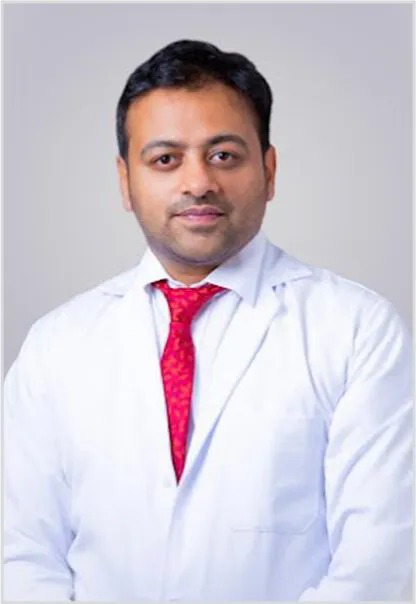
Dr. Pradyumna R
Best Orthopedic Surgeon in Bangalore | Robotic Joint Replacement & Sports Medicine Specialist
Designation: Consultant - Arthroscopy, Knee & Shoulder Surgery, Robotic TKR, Joint Replacement Surgeon, and Sports Medicine Specialist
Qualifications: MBBS | MS (Orthopaedics)
Languages Spoken Fluently:
15+ YEARS OF CLINICAL EXCELLENCE IN ADVANCED ORTHOPAEDIC CARE
Dr. Pradyumna R is widely recognized as one of the best orthopaedic surgeons in Bangalore, specializing in Robotic Total Knee Replacement, complex keyhole arthroscopic surgeries, sports medicine, shoulder and elbow reconstruction, and patient-centric recovery pathways.
Advanced Orthopaedic Care
Trusted Orthopaedic Expertise
Clinical Experience
15+ Years Experience20,000+ Happy Patients | Fellowship Trained at TUM, Germany
Surgical Track Record
5,000+ Surgeries PerformedKnee & Shoulder Arthroscopy | Joint Replacement | Trauma & Robotic Surgery
Recognized for Excellence
Outlook Award Winner 2024 & 2025Best Orthopedic & Joint Replacement Surgeon - South India