
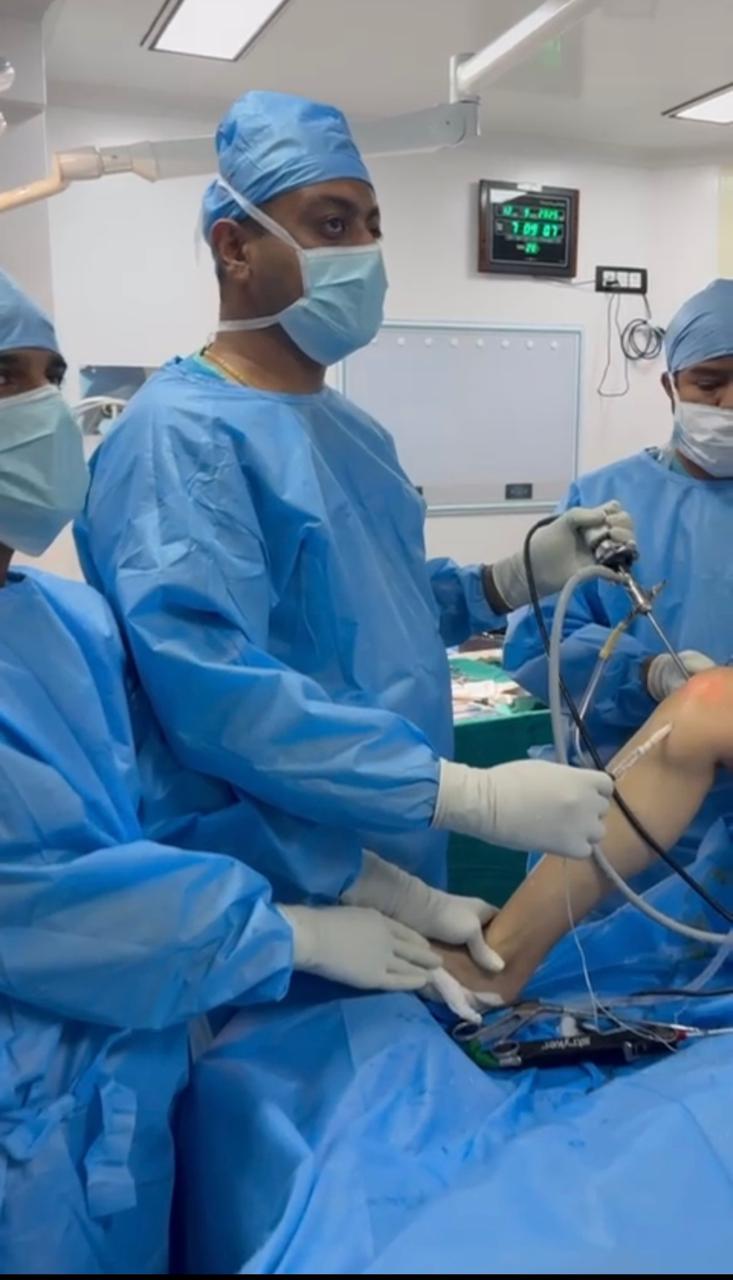
Cartilage damage in the knee is a common cause of pain, swelling, and stiffness, affecting athletes, active adults, and older individuals alike. Since cartilage has a limited ability to heal on its own, untreated injuries can worsen over time and increase the risk of knee arthritis. Early diagnosis and appropriate treatment can help relieve pain, restore mobility, and preserve the knee joint. If you’re looking for knee cartilage damage treatment in Bangalore, consulting an experienced orthopaedic surgeon can help determine the most suitable treatment based on your age, activity level, and the severity of cartilage damage.
What is Knee Cartilage?
Cartilage is the smooth tissue that covers the ends of the bones inside the knee joint. It allows the knee to move without friction while absorbing shock during activities such as walking, running, climbing stairs, and sports. When this cartilage becomes damaged due to injury or wear and tear, patients may experience pain, swelling, reduced mobility, and difficulty performing daily activities.
Symptoms of Knee Cartilage Damage
The symptoms vary depending on the location and severity of the injury but commonly include:
-
Knee pain: Discomfort during walking or climbing stairs
-
Swelling: Joint effusion after activity
-
Stiffness: Particularly noticeable after rest
-
Catching & Grinding: Clicking, catching, or grinding sensations
-
Flexion Pain: Difficulty squatting or kneeling
-
Limited Motion: Reduced range of motion
-
Instability: Feeling of instability during movement
Persistent symptoms should not be ignored, as untreated cartilage damage may progress over time.
What Causes Cartilage Damage?
Several factors can lead to cartilage injuries, including:
-
Sports Injuries: Involving twisting or direct impact
-
Ligament Tears: Associated ACL or meniscus tears
-
Repetitive Stress: Micro-trauma from running or jumping
-
Degeneration: Age-related cartilage wear
-
Obesity: Increased joint surface pressure
-
Prior Trauma: Previous knee injuries or surgery
-
Malalignment: Abnormal knee joint alignment
Athletes and physically active individuals are at higher risk, but cartilage damage can occur in anyone.
How is Cartilage Damage Diagnosed?
Diagnosis begins with a detailed clinical examination, during which your orthopaedic surgeon evaluates knee stability, swelling, tenderness, and range of motion. Investigations may include:
-
Digital X-rays: To assess bone alignment and arthritis
-
MRI Scan: Provides detailed information about cartilage, ligaments, and menisci
-
Diagnostic Arthroscopy: Allows direct visualization and treatment of cartilage injuries
Early diagnosis helps identify the extent of damage and allows timely intervention.
Treatment Options for Knee Cartilage Damage
Treatment depends on the size of the cartilage defect, symptoms, age, and activity level.
1. Non-Surgical Treatment
Many patients improve without surgery through:
-
Physiotherapy: To strengthen quadriceps, hamstrings, and supporting muscles
-
Activity Modification: Avoiding high-impact activities
-
Weight Management: Reducing compressive load on the joint
-
Medications: Anti-inflammatory support when appropriate
-
Knee Braces: Unloader or supportive bracing
-
Injections: Hyaluronic acid or PRP therapy
2. Surgical Treatment
When symptoms persist despite conservative treatment or the cartilage defect is significant, surgery may be recommended. Common procedures include:
-
Arthroscopic Debridement: Removal of loose cartilage fragments
-
Microfracture Surgery: Stimulating cartilage repair in small defects
-
Osteochondral Grafting (OATS): Transfer of cartilage plug for focal defects
-
Autologous Chondrocyte Implantation (ACI): Advanced cell-based restoration
-
Knee Replacement Surgery: For advanced arthritis with widespread cartilage loss
Your surgeon will recommend the most appropriate procedure after evaluating your condition.
Can Cartilage Damage Heal on Its Own?
Unlike muscles or skin, articular cartilage has a poor blood supply, limiting its ability to heal naturally. Small injuries may become less symptomatic with rehabilitation, but larger defects usually require medical evaluation and, in some cases, surgical treatment to prevent further joint deterioration.
When Should You See an Orthopaedic Surgeon?
Seek medical attention if you experience:
-
Knee pain lasting longer than two weeks
-
Recurrent joint swelling
-
Locking or catching sensations
-
Difficulty walking or climbing stairs
-
Pain after a sports injury
-
Persistent symptoms despite rest & physio
Early treatment can help preserve the knee and delay the progression of arthritis.
Why Choose Dr. Pradyumna R?
Dr. Pradyumna R is an orthopaedic surgeon specializing in sports injuries, knee arthroscopy, cartilage preservation procedures, ligament reconstruction, and joint replacement surgery. Using evidence-based treatment plans, he focuses on relieving pain, restoring knee function, and helping patients return safely to their daily activities and sports.
Consult Dr. Pradyumna R
For persistent knee pain, swelling, stiffness, locking, or difficulty returning to sports, consult Dr. Pradyumna R for a detailed evaluation and personalised treatment plan.
Dr. Pradyumna R
Consultant Orthopaedic Surgeon – Shoulder, Knee & Sports Medicine Specialist
Bangalore Orthopaedic Clinic
GF-450, 6th Main, 7th Cross, MICO Layout, BTM Layout 2nd Stage, Bengaluru – 560076
Phone: +91 91130 25188
Website: www.drpradyumna.com
Book an appointment today for expert assessment and treatment of knee cartilage injuries in Bangalore.
Frequently Asked Questions
1. What are the early symptoms of cartilage damage in the knee?
Early symptoms include knee pain during walking, climbing stairs, squatting, or sports activities. Many patients also notice swelling after exercise, stiffness after resting, clicking or grinding sensations, and reduced range of motion. Symptoms often develop gradually and may worsen if the cartilage injury is left untreated.
2. What causes cartilage damage in the knee besides injury?
Apart from sports injuries, cartilage damage can occur due to age-related wear, obesity, repetitive stress, poor limb alignment, inflammatory arthritis, previous knee surgeries, or chronic ligament instability. These factors increase pressure on the joint surface and accelerate cartilage wear over time.
3. Can knee cartilage damage heal on its own?
Articular cartilage has a very limited blood supply, which means it does not heal as effectively as muscles or skin. Small injuries may become less painful with physiotherapy and activity modification, but significant cartilage defects usually require evaluation by an orthopaedic surgeon to prevent further joint deterioration.
4. How is knee cartilage damage diagnosed?
Diagnosis begins with a detailed clinical examination. X-rays help evaluate bone alignment and arthritis, while an MRI scan provides detailed information about cartilage, ligaments, menisci, and other soft tissues. In selected cases, arthroscopy may be recommended to directly visualize and treat the damaged cartilage.
5. What is the difference between cartilage damage and a meniscus tear?
Articular cartilage covers the ends of the bones, allowing smooth joint movement, whereas the meniscus is a C-shaped cartilage that acts as a shock absorber between the bones. Although both conditions can cause knee pain and swelling, they involve different structures and often require different treatment approaches.
6. When is surgery required for knee cartilage damage?
Surgery may be recommended if symptoms persist despite physiotherapy and medications, if there are large cartilage defects, recurrent locking or catching of the knee, or when the injury significantly affects daily activities or sports. The choice of surgery depends on the size and location of the cartilage damage and the patient’s age and activity level.
7. What is microfracture surgery for the knee?
Microfracture surgery is a minimally invasive arthroscopic procedure in which tiny holes are created in the bone beneath the damaged cartilage. This stimulates the body’s natural healing response and encourages the formation of repair tissue. It is generally recommended for selected patients with small, localized cartilage defects.
8. What is the recovery time after knee cartilage repair surgery?
Recovery depends on the procedure performed. Simple arthroscopic procedures may allow return to daily activities within a few weeks, whereas cartilage restoration surgeries such as microfracture, OATS, or ACI typically require several months of rehabilitation. Most patients can expect a gradual return to sports within 6 to 12 months, depending on the surgery and healing progress.
9. Can cartilage damage lead to arthritis if untreated?
Yes. Untreated cartilage damage can increase friction between the bones, leading to progressive joint wear and eventually knee osteoarthritis. Early diagnosis and appropriate treatment can help preserve the joint and reduce the risk of long-term degeneration.
10. What non-surgical treatments are available for knee cartilage damage?
Many patients benefit from non-surgical treatments such as physiotherapy, activity modification, weight management, anti-inflammatory medications, knee braces, and selected injection therapies like platelet-rich plasma (PRP) or hyaluronic acid. Treatment is individualized based on the severity of the cartilage injury and the patient’s lifestyle.
11. Is knee cartilage damage common in athletes?
Yes. Athletes involved in sports such as football, cricket, badminton, basketball, and running are more prone to cartilage injuries because of repetitive impact, twisting movements, and sudden changes in direction. Prompt diagnosis and appropriate rehabilitation are important to safely return to sports.
12. What is the cost of knee cartilage treatment in Bangalore?
The cost depends on the type of treatment required, including consultations, imaging, physiotherapy, injections, arthroscopic procedures, or advanced cartilage restoration surgery. A thorough clinical evaluation helps determine the most suitable treatment plan and provides a more accurate estimate of the expected costs.
13. Can physiotherapy help with cartilage damage?
Yes. Physiotherapy is often the first line of treatment for many patients with cartilage damage. Strengthening the quadriceps, hamstrings, hip muscles, and core can improve knee stability, reduce pain, enhance joint function, and decrease stress on the damaged cartilage. It also plays a crucial role in recovery after surgery.
14. Who is the best doctor for knee cartilage treatment in Bangalore?
When choosing a doctor, look for an orthopaedic surgeon with expertise in sports medicine, knee arthroscopy, cartilage preservation, ligament reconstruction, and joint replacement. An experienced specialist can accurately diagnose the condition and recommend personalized treatment options based on your age, activity level, and the severity of cartilage damage.