
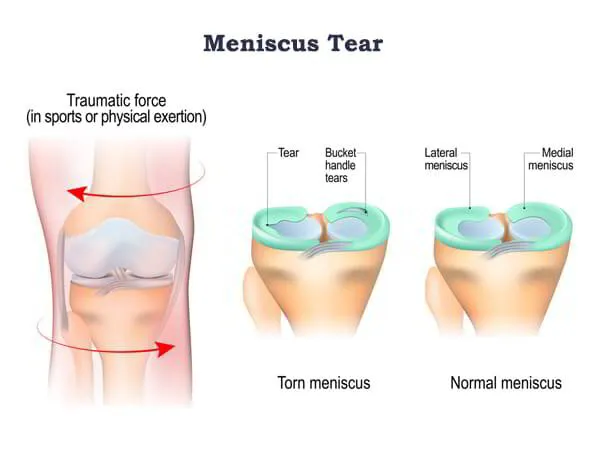
Knee pain, swelling, clicking, or a feeling that the knee is “catching” can sometimes be caused by a tear in the medial meniscus—the C-shaped cartilage located on the inner side of the knee. Meniscus injuries are common in athletes and active individuals, but they can also occur due to age-related degeneration or a simple twisting movement during everyday activities.
For patients considering medial meniscus repair in Bangalore, an important question is whether the damaged meniscus can be preserved rather than removed. Whenever the location, pattern, and quality of the tear allow it, repairing and preserving the meniscus may help maintain normal knee mechanics and protect the joint over the long term.
This guide explains medial meniscus tears, when surgery may be required, how meniscus repair is performed, and what patients can generally expect during recovery.
What Is the Medial Meniscus?
Each knee contains two menisci:
- Medial meniscus – located on the inner side of the knee
- Lateral meniscus – located on the outer side of the knee
These crescent-shaped structures are made of fibrocartilage and sit between the thigh bone (femur) and shin bone (tibia).
The menisci help distribute body weight across the knee, absorb shock, improve joint stability, and protect the articular cartilage covering the bones.
Because the medial meniscus is relatively less mobile than the lateral meniscus, it can be particularly vulnerable to injury during twisting or pivoting movements.
What Causes a Medial Meniscus Tear?
In younger and physically active individuals, medial meniscus tears commonly occur following a sports injury or sudden twisting movement.
Activities involving rapid changes in direction, deep squatting, pivoting, or rotation of the knee can place considerable stress on the meniscus. Meniscus tears may also occur together with ligament injuries such as an ACL tear.
In older adults, the meniscus can gradually become weaker and less flexible. This is known as a degenerative meniscus tear. In these cases, even a relatively minor movement such as squatting, kneeling, or turning may trigger symptoms.
Symptoms of a Medial Meniscus Tear
Symptoms depend on the size, pattern, and location of the tear.
Common symptoms include:
- Pain along the inner side of the knee
- Swelling or stiffness
- Pain while squatting or climbing stairs
- Clicking or popping sensations
- Difficulty fully bending or straightening the knee
- Pain during twisting movements
- A catching sensation inside the knee
- Knee locking in certain positions
Some patients remain able to walk after the initial injury, which can make the problem seem less serious than it actually is.
Persistent pain, recurrent swelling, locking, or difficulty returning to normal activity should be evaluated by an orthopaedic surgeon.
How Is a Medial Meniscus Tear Diagnosed?
Diagnosis usually begins with a detailed history and physical examination.
The orthopaedic surgeon assesses the location of pain, knee movement, swelling, stability, and signs that may suggest a meniscus injury.
An MRI scan is commonly used to evaluate the meniscus and determine the tear’s location, size, and pattern. MRI can also identify associated injuries involving the ACL, cartilage, or other structures within the knee.
X-rays do not show the meniscus directly but may be recommended to evaluate the bones and look for arthritis or other causes of knee pain.
Does Every Medial Meniscus Tear Need Surgery?
No.
Treatment depends on several factors, including:
- Patient’s age and activity level
- Size and pattern of the tear
- Location of the tear
- Blood supply to the injured area
- Whether the tear is traumatic or degenerative
- Presence of locking or mechanical symptoms
- Associated ligament injuries
- Overall condition of the knee
Small, stable tears without significant mechanical symptoms may sometimes be treated with activity modification, physiotherapy, and rehabilitation.
However, certain unstable or displaced tears may require arthroscopic surgery.
Meniscus Repair vs Meniscus Removal
When surgery is required, one of the most important considerations is whether the torn meniscus can be repaired.
Historically, damaged portions of the meniscus were frequently removed. Today, orthopaedic surgery increasingly emphasizes meniscus preservation whenever appropriate.
Meniscus Repair
During a repair, the torn portions of the meniscus are brought together and secured using specialized sutures or repair devices, allowing the tissue an opportunity to heal.
Partial Meniscectomy
If the damaged tissue cannot be repaired, only the unstable or irreparable portion may be removed while preserving as much healthy meniscus as possible.
The choice depends on the tear pattern, tissue quality, blood supply, and other clinical factors.
How Is Medial Meniscus Repair Performed?
Medial meniscus repair in Bangalore is generally performed using knee arthroscopy.
Arthroscopy is a minimally invasive technique in which the surgeon makes small incisions around the knee. A thin camera called an arthroscope is inserted into the joint, allowing the internal structures to be viewed on a monitor.
The surgeon examines the meniscus and confirms the characteristics of the tear.
If the tear is suitable for repair, its edges may be prepared to encourage healing. The torn tissue is then stabilized using specialized sutures or meniscal repair implants.
Depending on the location and configuration of the tear, different repair techniques may be used.
The objective is to restore the meniscus as closely as possible to its normal anatomy while preserving healthy tissue.
Recovery Timeline After Medial Meniscus Repair
Recovery after meniscus repair is generally more gradual than recovery after partial meniscectomy because the repaired cartilage needs sufficient time to heal.
Individual rehabilitation protocols vary depending on the tear and surgical technique.
First 1–2 Weeks
The initial focus is usually on controlling pain and swelling and protecting the repair.
Crutches may be required, and some patients may use a knee brace. Gentle exercises may begin according to the surgeon’s rehabilitation protocol.
Weeks 2–6
Weight-bearing is gradually progressed depending on the type and location of the repair.
Physiotherapy focuses on restoring knee movement and maintaining muscle activation while avoiding excessive stress on the healing meniscus.
Weeks 6–12
As healing progresses, strengthening becomes increasingly important.
Exercises may focus on the quadriceps, hamstrings, hips, balance, and controlled functional movements.
Walking typically becomes more comfortable as strength and mobility improve.
Months 3–6
Patients may gradually progress toward higher-level strengthening, running, agility training, and sports-specific exercises when appropriate.
Return to sport should be based on healing, strength, knee stability, functional testing, and the surgeon’s assessment rather than time alone.
Why Meniscus Preservation Matters
The meniscus plays an important role in distributing forces across the knee.
Removing meniscal tissue decreases the amount of cartilage available to absorb and distribute these forces. When a tear is suitable for repair, preserving the meniscus can therefore be particularly valuable in younger and active patients.
However, not every tear can or should be repaired. The decision needs to be individualized after examining the knee and reviewing imaging.
Frequently Asked Questions
1. What is a medial meniscus tear?
A medial meniscus tear is an injury involving the C-shaped cartilage on the inner side of the knee. Tears can occur due to sudden twisting injuries or gradual degeneration of the meniscus over time.
2. What are the symptoms of a medial meniscus tear?
Common symptoms include pain along the inner knee, swelling, stiffness, clicking, catching, pain during twisting or squatting, and difficulty fully bending or straightening the knee. Some larger or displaced tears may cause knee locking.
3. When does a medial meniscus tear require surgery?
Surgery may be considered when there is an unstable or displaced tear, persistent pain despite appropriate conservative treatment, recurrent mechanical symptoms, or locking of the knee. The decision also depends on the patient’s age, activity level, tear pattern, and associated injuries.
4. Can a medial meniscus tear heal without surgery?
Some small and stable tears can improve without surgery, particularly when they are located in areas with a better blood supply. Physiotherapy, activity modification, and appropriate rehabilitation may be recommended. However, certain tear patterns have limited potential to heal naturally.
5. How is medial meniscus repair performed?
Meniscus repair is usually performed arthroscopically through small incisions. A camera is inserted into the knee, the tear is assessed, and suitable tears are secured using specialized sutures or repair devices to allow the tissue to heal.
6. How long does medial meniscus repair surgery take?
An isolated arthroscopic meniscus repair commonly takes approximately 30–60 minutes, although the duration can vary depending on the complexity of the tear and whether additional procedures, such as ACL reconstruction, are required.
7. How long does it take to walk after meniscus repair?
Many patients begin some form of protected walking relatively early, often using crutches and sometimes a brace. Full weight-bearing depends on the type of tear and repair technique and should follow the surgeon’s specific rehabilitation protocol.
8. How long does it take to fully recover from meniscus repair?
Recovery commonly takes approximately 3–6 months, although complex tears or combined ligament procedures may require longer. Recovery varies according to the injury, surgical technique, rehabilitation progress, and individual healing.
9. Can I return to sports after medial meniscus repair?
Yes. Many patients return to sports following successful healing and rehabilitation. Running, pivoting, and competitive sports are introduced gradually after adequate strength, mobility, balance, and knee control have returned. Clearance from the treating surgeon and physiotherapist is important before returning to unrestricted sport.
10. How much does medial meniscus repair cost in Bangalore?
The cost of medial meniscus repair in Bangalore varies depending on the hospital, surgeon, complexity of the tear, type and number of repair implants required, anesthesia, investigations, and insurance coverage.
An accurate estimate can usually be provided after clinical examination and review of the MRI because the surgical requirements differ between patients.