
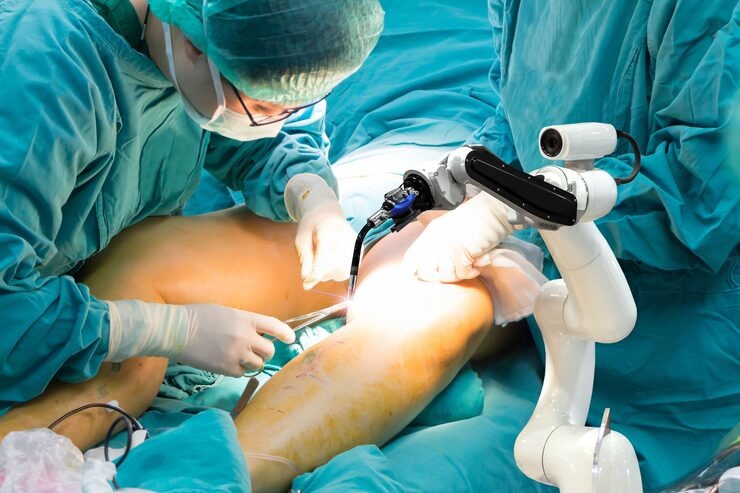
Knee pain caused by arthritis or injury can severely limit mobility and quality of life. When medications, physiotherapy, and lifestyle changes no longer provide relief, Total Knee Replacement (TKR) becomes a reliable solution. In recent years, robotic total knee replacement has transformed this procedure bringing in unmatched precision, personalization, and improved outcomes.
What is Robotic Total Knee Replacement?
Robotic Total Knee Replacement in Bangalore is an advanced surgical procedure where a robotic-assisted system helps the surgeon perform knee replacement with greater accuracy. Contrary to common belief, the robot does not operate independently. Instead, it acts as a highly sophisticated tool controlled entirely by the surgeon.
The goal remains the same as traditional knee replacement:
- Remove damaged cartilage and bone
- Replace it with a prosthetic implant
- Restore smooth, pain-free movement
However, robotics enhances how precisely each of these steps is executed.
How Does Robotic Knee Replacement Work?
The procedure involves three key stages:
1. Pre-Surgical Planning
Before surgery, advanced imaging such as a CT scan creates a 3D model of your knee joint. This allows the surgeon to:
- Study your unique anatomy
- Plan exact implant size and positioning
- Customize alignment for optimal function
Whether you are being evaluated for robotic knee replacement, unicondylar knee replacement, or a high tibial osteotomy, precise pre-surgical planning by a skilled unicondylar knee replacement surgeon in Bangalore or high tibial osteotomy surgeon in Bangalore ensures that your treatment path is tailored to your specific condition.
2. Intraoperative Precision
During surgery:
- The robotic system provides real-time guidance
- It maps the knee structures and tracks movement
- The surgeon uses a robotic arm to perform bone cuts with sub-millimeter accuracy
The system ensures:
- Minimal damage to surrounding tissues
- Perfect implant positioning
- Balanced knee alignment
For patients undergoing ligament-related procedures such as ACL reconstruction surgery in Bangalore or PCL reconstruction performed by an experienced PCL reconstruction surgeon in Bangalore, the same commitment to intraoperative precision guides every incision and repair.
3. Implant Placement
The artificial knee components are placed precisely according to the pre-surgical plan. This improves:
- Joint stability
- Range of motion
- Longevity of the implant
Key Benefits of Robotic Knee Replacement
- Higher Precision & Accuracy Robotic systems reduce human error and ensure consistent surgical outcomes.
- Personalized Surgery Each procedure is tailored to the patient's anatomy rather than using a one-size-fits-all approach.
- Faster Recovery Less tissue damage leads to:
- Reduced pain
- Shorter hospital stay
- Quicker return to daily activities
- Better Implant Longevity Accurate alignment reduces wear and tear, increasing the lifespan of the implant.
- Improved Function Patients often experience a more natural-feeling knee post-surgery.
Who is a Candidate?
Robotic Total Knee Replacement is ideal for patients with:
- Severe osteoarthritis
- Rheumatoid arthritis
- Post-traumatic arthritis
- Chronic knee pain not responding to conservative treatment
It is especially beneficial for patients seeking high precision and faster recovery outcomes. Patients dealing with sports-related injuries may also benefit from consulting a sports medicine specialist in Bangalore, who can determine whether procedures such as meniscus surgery in Bangalore, knee arthroscopy performed by a qualified knee arthroscopy surgeon in Bangalore, or advanced biological treatments like Regeneten patch surgery in Bangalore are appropriate before considering a full knee replacement.
Recovery & Rehabilitation
Recovery after robotic knee replacement is generally smoother compared to conventional surgery.
Typical timeline:
- Walking with support: within 24-48 hours
- Basic activities: 2-4 weeks
- Full recovery: 6-12 weeks (varies by patient)
Physiotherapy plays a crucial role in restoring:
- Strength
- Flexibility
- Joint function
Is Robotic Knee Replacement Safe?
Yes, robotic-assisted knee replacement is considered safe and effective when performed by an experienced orthopedic surgeon. Whether you are looking for a trusted robotic knee replacement surgeon in Bangalore or seeking expert care for complex ligament and soft tissue conditions, choosing a specialist with a comprehensive skill set ensures the best possible outcomes. The technology enhances surgical control rather than replacing the surgeon's expertise.
Conclusion
Robotic Total Knee Replacement represents the future of orthopedic surgery combining human expertise with technological precision. For patients suffering from debilitating knee pain, it offers a more accurate, personalized, and faster path to recovery.
Book a Consultation
If knee pain is affecting your daily life, it may be time to explore advanced treatment options.
- Bangalore Orthopaedic Clinic Centre of Excellence for Arthroscopy, Joint Replacement & Sports Injuries
- 📞 Call: +91-9113025188
- 🌐 Visit: www.drpradyumna.com
Take the first step toward a pain-free, active life.
FAQs on Robotic Total Knee Replacement
Robotic knee replacement offers higher precision and better implant alignment, which can lead to improved outcomes, less pain, and faster recovery compared to traditional methods.
No. The surgery is fully controlled by the surgeon. The robotic system only assists by enhancing accuracy and providing real-time guidance.
With proper care, implants can last 15-25 years or more, and precise placement with robotics may further improve longevity.
Yes, most patients experience quicker recovery, less tissue damage, and reduced post-operative pain compared to conventional surgery.
Yes, it is a safe and well-established procedure when performed by a trained orthopedic surgeon. The technology enhances surgical precision and reduces complications.