/
Who Is a Shoulder Arthroscopic Surgeon?
A shoulder arthroscopic surgeon is an orthopaedic specialist trained to diagnose and treat shoulder problems using minimally invasive keyhole surgery.
Dr. Pradyumna R is a fellowship-trained Shoulder Arthroscopic Surgeon in Bangalore who evaluates and treats rotator cuff tears, recurrent shoulder dislocations, Bankart lesions, SLAP tears, labral injuries, biceps tendon problems and sports-related shoulder injuries.
Shoulder arthroscopy is not required for every patient with shoulder pain. Dr. Pradyumna considers the patient's symptoms, physical examination, imaging findings, age, occupation, sporting requirements and response to non-surgical treatment before recommending surgery.
When Should You Consult a Shoulder Arthroscopy Specialist?
Shoulder pain may arise from tendons, ligaments, cartilage, muscles, bones or the neck. A specialist evaluation is recommended when pain or instability begins affecting sleep, work, exercise or normal daily activities.
You should consider consulting a shoulder specialist when you experience:
- Shoulder pain lasting for several weeks
- Pain while raising or rotating the arm
- Difficulty performing overhead activities
- Pain while sleeping on the affected shoulder
- Weakness while lifting or carrying objects
- Clicking, catching or locking inside the shoulder
- Repeated shoulder dislocations
- A feeling that the shoulder may slip out
- Reduced throwing strength
- Loss of shoulder movement
- Persistent pain after physiotherapy
- Difficulty dressing, bathing or combing your hair
- Shoulder pain following a fall, gym injury or sports injury
Urgent Attention: Urgent medical attention may be required if the shoulder appears visibly deformed, severe pain follows a major accident, the arm becomes numb or cold, or the patient cannot move the shoulder after an injury.
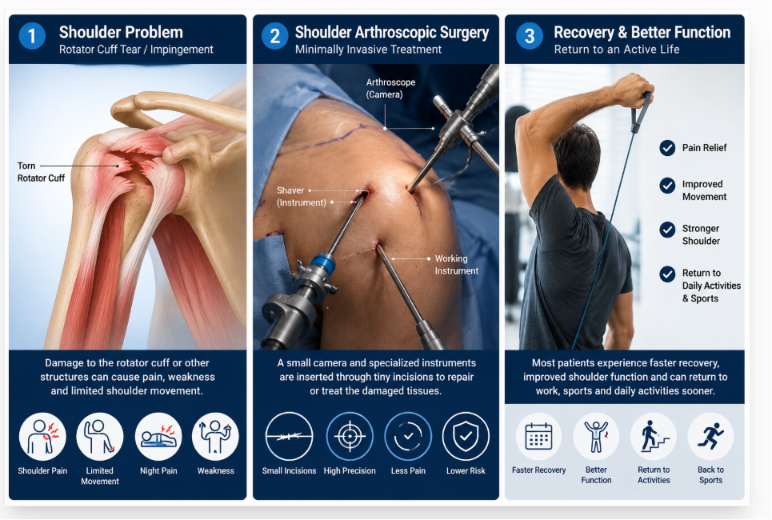
Shoulder Problem, Arthroscopic Surgery & Recovery Overview
Shoulder Conditions Treated with Arthroscopy
Rotator Cuff Tears
The rotator cuff consists of tendons and muscles that help lift, rotate and stabilise the shoulder.
A rotator cuff tear may occur because of:
- Age-related tendon degeneration
- Repeated overhead activity
- A fall on the shoulder
- Sudden lifting
- Sports injuries
- Long-standing shoulder impingement
Patients may experience night pain, weakness, pain while lifting the arm and difficulty sleeping on the affected side.
Not every rotator cuff tear requires surgery. Partial or degenerative tears may initially be treated with activity modification, medication and physiotherapy.
Arthroscopic rotator cuff repair may be considered when a significant tear causes persistent pain, weakness or loss of function despite appropriate treatment. During the procedure, the torn tendon is reattached to the bone using sutures and specialised anchors.
Recurrent Shoulder Dislocation
A shoulder dislocation occurs when the ball of the upper-arm bone moves out of its socket.
The first dislocation can damage the labrum, ligaments or bone surrounding the shoulder. Some patients subsequently experience repeated dislocations or a persistent feeling of instability.
Shoulder stabilisation surgery may be considered when:
- The shoulder dislocates repeatedly
- Instability occurs during routine activities
- The patient participates in contact or overhead sports
- Physiotherapy does not restore sufficient stability
- Imaging shows a Bankart lesion
- Shoulder instability affects work or daily activities
Patients with limited bone loss may be suitable for arthroscopic Bankart repair. Patients with substantial bone loss or complex instability may require a different procedure, such as Latarjet surgery. Arthroscopic Bankart repair generally involves reattaching the damaged anterior labrum and capsule to the shoulder socket using anchors.
Bankart Lesion
A Bankart lesion is an injury to the lower portion of the shoulder labrum. It commonly develops during an anterior shoulder dislocation.
The damaged labrum and ligaments may no longer hold the shoulder securely within its socket.
During arthroscopic Bankart repair, the surgeon may:
- Examine the damaged labrum and capsule.
- Prepare the edge of the shoulder socket.
- Insert suture anchors into the bone.
- Reattach the labrum.
- Tighten stretched capsular tissue where necessary.
- Examine the stability of the repaired shoulder.
The treatment decision depends on the patient's age, number of dislocations, sporting activity, ligament laxity, bone loss and previous treatment.
SLAP Tear
A SLAP tear affects the upper part of the shoulder labrum near the attachment of the biceps tendon.
It may result from repetitive throwing, weightlifting, a fall on an outstretched arm or age-related tissue changes.
Possible symptoms include:
- Deep shoulder pain
- Clicking or catching
- Pain during overhead activity
- Reduced throwing performance
- Discomfort while lifting
- A sensation of weakness or instability
Not every SLAP tear requires repair. Treatment depends on the patient's age, symptoms, activity level and the pattern of the tear.
Surgical treatment may include removing unstable tissue, repairing the labrum or treating the biceps tendon.
Shoulder Impingement
Shoulder impingement occurs when the rotator cuff tendons or the surrounding bursa become irritated during arm movement.
Patients may experience pain while raising the arm, night pain, discomfort during overhead work and reduced shoulder strength.
Initial treatment commonly includes physiotherapy, posture correction, activity modification and medication. Arthroscopic treatment may be considered only when symptoms continue despite an appropriate course of non-surgical care.
Frozen Shoulder
Frozen shoulder, also called adhesive capsulitis, causes pain and progressive restriction of shoulder movement.
Most patients are first treated with:
- Pain management
- Physiotherapy
- Home exercises
- Injections when appropriate
- Management of diabetes or other contributing conditions
Arthroscopic capsular release may be considered when severe stiffness continues despite adequate conservative treatment.
Biceps Tendon Problems
The long head of the biceps tendon may become inflamed, unstable or damaged.
Depending on the patient's symptoms and associated shoulder conditions, treatment may include medication, physiotherapy, injections, biceps tenotomy or biceps tenodesis.
How Are Shoulder Problems Diagnosed?
An MRI report alone should not determine whether shoulder surgery is required. An accurate diagnosis combines medical history, physical examination and appropriate imaging.
Medical History
The consultation may include questions about:
- How the symptoms began
- Whether an injury occurred
- Duration and location of pain
- Previous shoulder dislocations
- Night pain
- Weakness
- Previous physiotherapy or injections
- Sports participation
- Occupational requirements
- Diabetes or other medical conditions
Physical Examination
The surgeon may evaluate:
- Active and passive shoulder movement
- Rotator cuff strength
- Shoulder stability
- Tenderness
- Scapular movement
- Biceps and labral symptoms
- Neck movement
- Nerve function
- Signs of impingement
X-rays
X-rays may identify fractures, arthritis, bone spurs, calcium deposits, joint alignment and bone loss following shoulder dislocation.
MRI
MRI may be advised to assess rotator cuff tears, labral injuries, muscle condition, biceps tendon problems, cartilage damage and inflammation.
CT Scan
A CT scan may be required when detailed evaluation of fractures, bone loss or recurrent shoulder instability is necessary.
Is Shoulder Arthroscopy Always Necessary?
No. Many shoulder conditions can improve without surgery.
Depending on the diagnosis, non-surgical treatment may include:
- Temporary modification of painful activities
- Pain-relieving or anti-inflammatory medication
- Supervised physiotherapy
- Rotator cuff strengthening
- Scapular stabilisation exercises
- Posture correction
- Sports technique modification
- Injections in selected cases
- A gradual return-to-activity programme
Surgery may be discussed when symptoms remain significant despite appropriate treatment or when a structural injury is unlikely to recover adequately without repair.
When May Arthroscopic Shoulder Surgery Be Recommended?
Shoulder arthroscopy may be considered when:
- A rotator cuff tear causes persistent weakness
- Shoulder pain continues despite appropriate physiotherapy
- Repeated dislocations affect daily life or sports
- A labral injury causes persistent instability
- An acute traumatic tendon tear requires repair
- Shoulder stiffness remains severe despite treatment
- The injury prevents the patient from working
- Symptoms continue to worsen
- Imaging confirms a repairable structural injury
- Non-surgical treatment has not provided adequate improvement
The final recommendation should be personalised. Two patients with similar MRI findings may require different treatments because symptoms, tissue quality, activity requirements and general health can differ.
Step-by-Step Shoulder Arthroscopy Procedure
1
Step 1: Preoperative Assessment
The diagnosis, treatment alternatives, expected recovery and possible risks are discussed. Blood tests, medical clearance and anaesthesia assessment may be arranged.
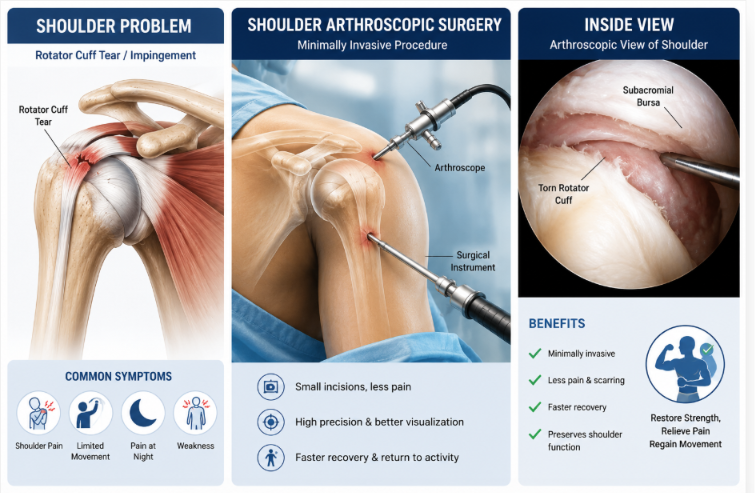
Shoulder Arthroscopic Surgery Inside View & Key Benefits
2
Step 2: Anaesthesia
Shoulder arthroscopy is commonly performed under general anaesthesia. A regional nerve block may also be used for postoperative pain control.
3
Step 3: Positioning
The patient is positioned to provide safe access to the shoulder. The skin is cleaned, and the arm is prepared for surgery.
4
Step 4: Camera Insertion
A small incision is made, and an arthroscope is inserted into the shoulder. Sterile fluid expands the joint and improves visibility.
5
Step 5: Joint Examination
The surgeon examines the rotator cuff, labrum, cartilage, biceps tendon, ligaments and joint capsule.
6
Step 6: Surgical Treatment
Additional small incisions are created for specialised instruments.
Depending on the diagnosis, the procedure may include:
- Rotator cuff repair
- Bankart repair
- Labral repair
- Capsular tightening
- Biceps tenodesis
- Removal of damaged tissue
- Frozen shoulder release
- Removal of loose cartilage or bone
- Treatment of selected impingement conditions
7
Step 7: Closure
The instruments are removed, the small incisions are closed, and a dressing is applied. The arm may be supported in a sling.
8
Step 8: Recovery
The surgical team monitors pain, circulation and general health. Many procedures may be performed as day-care or short-stay surgery, depending on the operation and patient's condition.
Shoulder Arthroscopy Recovery Timeline
Recovery varies according to the condition treated. A simple diagnostic procedure usually has a different recovery period from a rotator cuff repair or shoulder stabilisation surgery.
| Recovery period | Usual focus |
|---|---|
| First 24–72 hours | Pain control, wound protection and hand, wrist and elbow movement |
| Weeks 1–4 | Sling protection and prescribed exercises |
| Weeks 4–8 | Gradual improvement in shoulder movement |
| Weeks 8–12 | Progressive movement and early strengthening when permitted |
| Months 3–4 | Strengthening and improvement in daily activities |
| Months 4–6 | Functional recovery for many patients |
| Six months onward | Return to demanding sports or overhead activity when medically cleared |
The exact rehabilitation programme depends on what was repaired. A patient undergoing rotator cuff repair may need a longer period of protection than someone undergoing a minor arthroscopic procedure.
Returning to strenuous activity too early can place stress on healing tendons or labral tissue. Patients should follow the instructions provided by their surgeon and physiotherapist.
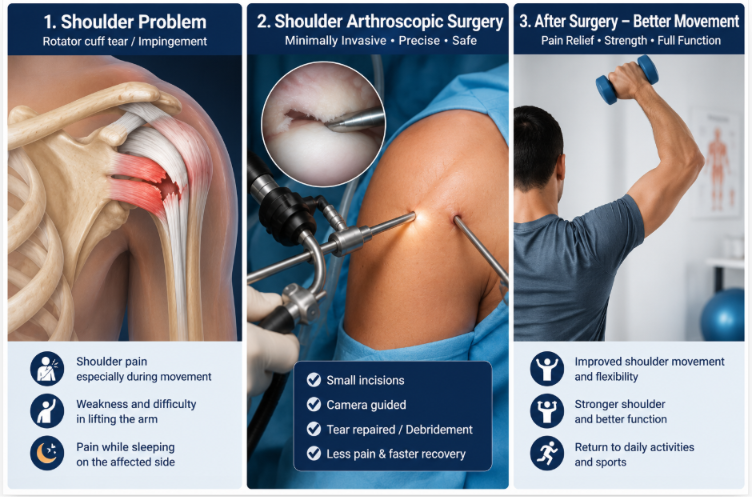
Shoulder Arthroscopy Post-Op Recovery & Restored Movement
Benefits and Limitations of Shoulder Arthroscopy
Possible Benefits
- Small surgical incisions
- Direct visualisation of structures inside the shoulder
- Ability to diagnose and treat during the same procedure
- Less disruption of surrounding tissue in selected operations
- Short hospital stay for many patients
- Structured postoperative rehabilitation
However, arthroscopy does not guarantee complete pain relief, full movement or return to sport.
Results Depend On
- Type and severity of injury
- Tissue quality
- Patient age
- Smoking
- Diabetes control
- Previous surgery
- Rehabilitation
- Compliance with postoperative restrictions
Possible Risks
All surgical procedures carry potential risks.
Risks associated with shoulder arthroscopy may include:
- Infection
- Bleeding
- Anaesthesia-related complications
- Nerve or blood-vessel injury
- Shoulder stiffness
- Persistent pain
- Incomplete tendon healing
- Re-tear
- Recurrent instability
- Anchor-related complications
- Need for further surgery
The individual risks and expected benefits should be discussed before deciding on surgery.
About Dr. Pradyumna R
Dr. Pradyumna R is a Consultant in Shoulder and Sports Medicine with experience in shoulder arthroscopy, sports injuries and reconstructive shoulder procedures.
His qualifications and advanced training include:
- MBBS
- MS in Orthopaedics
- International Fellowship in Arthroscopy of the Knee, Shoulder and Sports Medicine under ISAKOS
- Fellowship in Shoulder and Elbow Surgery at TUM, Munich, Germany
- Fellowship in Complex Shoulder Arthroscopy and Arthroplasty at SNUBH, Seoul, South Korea
- FIFA Diploma in Football Medicine
His official Manipal Hospitals profile lists more than 13 years of experience and more than 2,000 shoulder arthroscopy procedures. His clinical expertise includes rotator cuff repair, Bankart and SLAP lesions, Latarjet surgery, shoulder replacement and sports injury management.
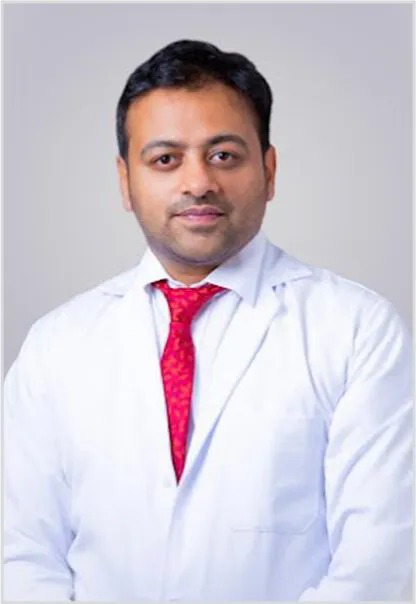
Kanakapura Road - Bengaluru
Dr. Pradyumna R
Consultant - Arthroscopy, Knee & Shoulder Surgery, Robotic TKR, Joint Replacement Surgeon, and Sports Medicine Specialist
Qualification: MBBS | MS (Ortho) | Fellowship in Arthroscopy & Sports Medicine | Fellowship in Shoulder & Elbow Surgery (Germany)
Languages Spoken:
EnglishKannadaHindiTeluguTamil
ORTHOPAEDIC & ARTHROSCOPIC SURGEON, SPORTS MEDICINE SPECIALIST WITH 15+ YEARS EXPERIENCE
I am a Consultant Orthopaedic Surgeon and Sports Medicine Specialist in Bangalore with over 13 years of experience, specializing in arthroscopic (keyhole) and minimally invasive procedures. I combine advanced surgical expertise with a deep understanding of the patient experience. I take time to listen carefully to my patients and provide personalized treatment options.
15+ YearsExperience
2,000+Shoulder Scopes
5,000+Surgeries
ISAKOSFellowship
Dr. Pradyumna's Approach to Shoulder Treatment
Dr. Pradyumna does not recommend shoulder arthroscopy based solely on an MRI report.
Treatment planning takes into account:
- The patient's symptoms
- Clinical examination
- Shoulder strength and stability
- Imaging findings
- Bone loss
- Tissue quality
- Age
- Work requirements
- Sporting goals
- Previous treatment
- Ability to participate in rehabilitation
Non-surgical treatment is considered first whenever it is medically appropriate. When surgery is recommended, the proposed procedure, possible alternatives, recovery period and limitations are explained to the patient.
Frequently Asked Questions
1. Is shoulder arthroscopy the same as keyhole surgery?
Yes. Shoulder arthroscopy is commonly called keyhole surgery because the camera and specialised instruments are inserted through small incisions.
2. Does every rotator cuff tear require surgery?
No. Some partial or degenerative tears may improve with physiotherapy, medication and activity modification. Surgery may be considered for significant traumatic tears, persistent weakness or symptoms that do not improve adequately.
3. Can recurrent shoulder dislocation be treated arthroscopically?
Many patients with recurrent instability and limited bone loss may be treated with arthroscopic Bankart repair. Significant bone loss or complex instability may require another procedure.
4. What is Bankart repair?
Bankart repair reattaches the damaged labrum and supporting capsule to the shoulder socket using sutures and anchors. It is performed to improve stability after recurrent anterior shoulder dislocation.
5. How long does shoulder arthroscopy take?
The duration depends on the procedure. A simple arthroscopy may take less time than rotator cuff repair, labral repair or complex shoulder stabilisation.
6. Is it a day-care procedure?
Many shoulder arthroscopy procedures can be performed as day-care or short-stay surgery. Admission depends on the operation, anaesthesia and patient's medical health.
7. How long will I need to wear a sling?
Sling duration depends on what was repaired. A tendon or labral repair generally requires longer protection than a minor diagnostic or cleaning procedure.
8. When can I return to office work?
Some patients may return to light desk work within a few weeks. Recovery may take longer when the operated arm is dominant, travel is required or the job involves lifting.
9. When can I drive?
Driving should resume only after the patient is no longer dependent on a sling, is not using sedating medication and can safely control the vehicle. Surgeon approval is necessary.
10. When can I return to sports?
Return to sport depends on tissue healing, shoulder movement, strength, stability and sport-specific testing. Throwing, swimming, racket sports and contact sports generally require longer rehabilitation.
11. What is the cost of shoulder arthroscopy in Bangalore?
Cost depends on the condition, type of repair, number of anchors, hospital, room category, anaesthesia, investigations, insurance coverage and postoperative rehabilitation. A personalised estimate is provided after evaluation.
12. Is shoulder arthroscopy covered by insurance?
Medically necessary shoulder arthroscopy may be covered by insurance, subject to policy conditions, waiting periods, hospital network and implant limits. Written pre-authorisation should be obtained before admission.
13. Can frozen shoulder be treated with arthroscopy?
Most frozen shoulder cases are treated without surgery. Arthroscopic capsular release may be considered when severe pain and stiffness continue despite appropriate conservative treatment.
14. Can I consult Dr. Pradyumna for a second opinion?
Yes. Patients may bring their MRI scans, X-rays, prescriptions and previous treatment records for an assessment of surgical and non-surgical options.
Medical Review
Medically reviewed by: Dr. Pradyumna R
Qualifications: MBBS, MS in Orthopaedics
Specialty: Shoulder and Sports Medicine
Last reviewed: 15 July 2026
Medical Disclaimer
This information is intended for patient education and does not replace examination, diagnosis or personalised medical advice. Treatment, surgery, recovery and results differ between patients. Seek urgent medical attention for serious injury, visible deformity, numbness, loss of circulation, fever or rapidly worsening pain.
Advanced Orthopaedic Care
Trusted Orthopaedic Expertise
Patient Trust
Clinical Experience
15+ Years Experience20,000+ Happy Patients | Fellowship Trained at TUM, Germany
Surgical Volume
Surgical Track Record
5,000+ Surgeries PerformedKnee & Shoulder Arthroscopy | Joint Replacement | Trauma & Robotic Surgery
Awards
Recognized for Excellence
Outlook Award Winner 2024 & 2025Best Orthopedic & Joint Replacement Surgeon - South India