
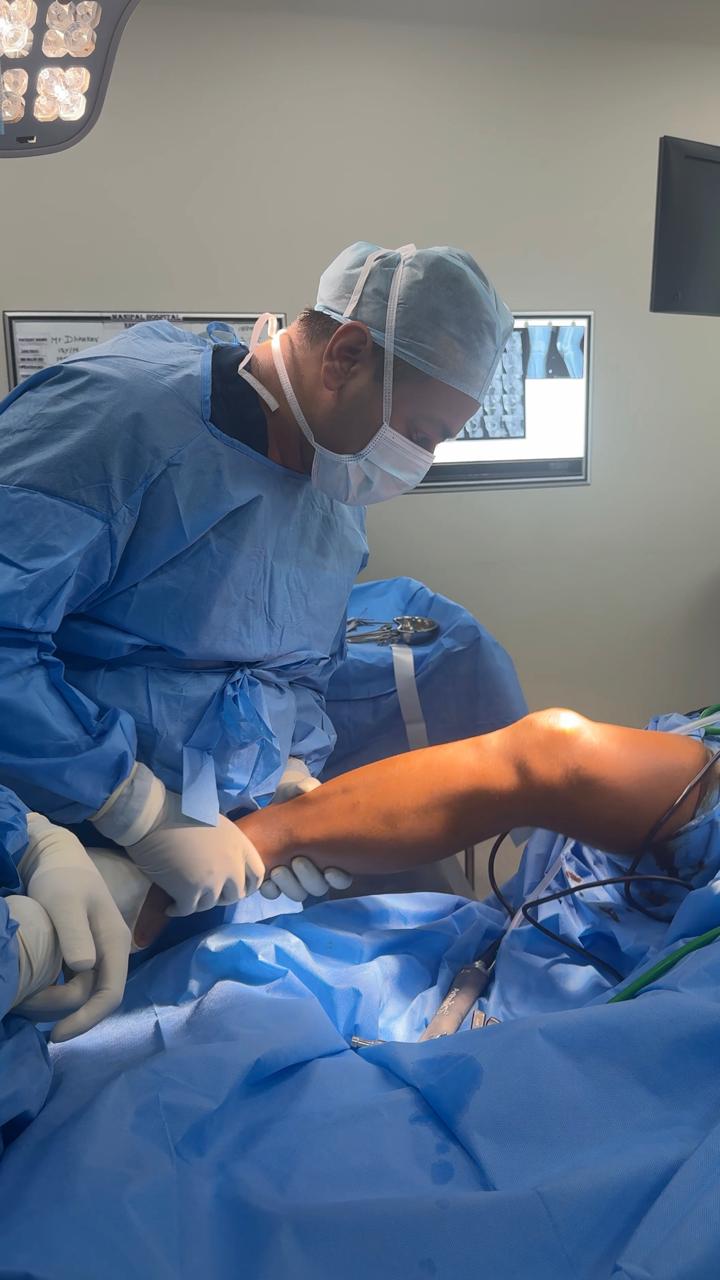
Knee pain caused by arthritis doesn’t always mean you need surgery. In fact, many patients can manage their symptoms effectively with non-surgical treatments for several years before considering knee replacement.
The key lies in early diagnosis, lifestyle changes, and choosing the right treatment plan tailored to the stage of arthritis.
If you’re searching for alternatives to knee replacement in Bangalore, it’s important to understand that there is no one-size-fits-all solution. While some patients respond remarkably well to physiotherapy and injections, others may eventually benefit from surgery.
An experienced orthopedic specialist can help determine the most appropriate treatment based on your symptoms, X-rays, activity level, and long-term goals.
Understanding Knee Arthritis
Knee arthritis occurs when the protective cartilage cushioning the ends of the bones gradually wears away. This leads to pain, stiffness, swelling, and difficulty performing everyday activities such as climbing stairs, walking long distances, or getting up from a chair.
The earlier arthritis is diagnosed, the greater the chance of managing symptoms without surgery. Patients with mild to moderate arthritis often achieve excellent relief through conservative treatment.
If you’ve recently been diagnosed with arthritis, learning more about the knee arthritis treatment options available can help you make informed decisions before considering surgery.
1. Physiotherapy: The First Step Before Surgery
Physiotherapy remains one of the most effective alternatives to knee replacement for early and moderate arthritis. A personalized rehabilitation program focuses on strengthening the muscles around the knee, improving flexibility, and restoring joint stability.
Stronger muscles reduce the load transmitted through the damaged cartilage, helping decrease pain and improve mobility.
A typical physiotherapy program includes:
- Quadriceps strengthening
- Hamstring stretching
- Hip strengthening
- Balance and gait training
- Range-of-motion exercises
Many patients experience noticeable improvement after six to eight weeks of supervised therapy combined with a home exercise program.
2. Weight Loss Can Significantly Reduce Knee Pain
Excess body weight places tremendous stress on the knee joints. Research shows that every kilogram of weight lost reduces the force transmitted across the knee several times during walking.
Even a modest weight loss of 5-10% can:
- Reduce pain
- Improve walking ability
- Slow arthritis progression
- Improve response to physiotherapy
Weight management is often one of the simplest and most effective ways to delay knee replacement.
3. Medications for Symptom Relief
Although medications cannot reverse arthritis, they help manage pain and inflammation, allowing patients to remain active.
Treatment may include:
- Paracetamol
- Anti-inflammatory medications (NSAIDs)
- Topical pain-relieving gels
- Short-term pain medication during flare-ups
These medications should always be used under medical supervision, especially in patients with kidney disease, stomach ulcers, or heart conditions.
4. PRP (Platelet-Rich Plasma) Injections
PRP therapy has become an increasingly popular treatment for selected patients with early to moderate knee arthritis. PRP is prepared using the patient’s own blood, which is processed to concentrate platelets containing natural growth factors.
The injection may help reduce inflammation, improve pain, and enhance joint function. While PRP does not regenerate severely damaged cartilage or cure arthritis, it can delay surgery and improve quality of life in carefully selected patients.
Patients considering PRP should undergo a detailed evaluation to determine whether they are suitable candidates, as outcomes vary depending on the stage of arthritis.
5. Exercise and Activity Modification
Remaining active is important-but choosing the right activities matters. Low-impact exercises help maintain joint mobility while minimizing stress on the knee.
Recommended activities include:
- Walking on even surfaces
- Swimming
- Cycling
- Yoga
- Water-based exercises
High-impact activities such as running, jumping, and repetitive squatting may aggravate symptoms in advanced arthritis.
6. Knee Braces and Supportive Devices
For patients with arthritis affecting one side of the knee, specially designed unloading braces can reduce pain by redistributing pressure across the joint.
Walking sticks, shoe modifications, and supportive footwear can also improve stability and reduce discomfort during daily activities.
Are Stem Cell Treatments Worth Considering?
Stem cell therapy receives considerable attention, but patients should understand that scientific evidence is still evolving. While ongoing research is promising, stem cell treatment has not yet become standard care for knee arthritis.
Patients should be cautious about clinics promising complete cartilage regeneration or guaranteed avoidance of surgery.
A consultation with an orthopedic specialist can help determine whether regenerative therapies are appropriate based on current evidence.
When Is Knee Replacement the Better Option?
Despite the benefits of conservative treatment, there are situations where knee replacement offers the best long-term outcome.
Surgery may be recommended when:
- Pain persists despite months of non-surgical treatment
- Walking becomes severely limited
- Daily activities are significantly affected
- Sleep is disturbed due to knee pain
- X-rays show advanced cartilage loss and severe arthritis
Modern robotic knee replacement techniques offer greater surgical precision, improved implant positioning, and faster recovery for suitable patients.
If conservative treatment is no longer providing relief, discussing robotic knee replacement surgery with your orthopedic surgeon can help you understand the benefits and expected recovery.
Why Early Evaluation Matters
Many people delay seeking treatment until arthritis has significantly progressed. However, early intervention often allows patients to control symptoms, maintain an active lifestyle, and postpone surgery for several years.
A comprehensive evaluation considers not only X-rays but also your pain level, mobility, occupation, lifestyle, and treatment goals.
Every patient deserves an individualized plan rather than a one-size-fits-all approach.
If you’re looking for alternatives to knee replacement in Bangalore, consulting an orthopedic surgeon early can help you explore all available options and make confident decisions about your knee health.
Frequently Asked Questions
Can I avoid knee replacement surgery?
Yes. Many patients with mild to moderate arthritis can successfully manage symptoms through physiotherapy, weight management, medications, injections, and lifestyle modifications.
What are the best alternatives to knee replacement in Bangalore?
Physiotherapy, weight loss, PRP injections, pain medications, activity modification, knee braces, and supervised exercise programs are among the most effective alternatives.
Does physiotherapy help avoid knee replacement?
Yes. Strengthening the muscles around the knee improves stability, reduces pain, and can delay the need for surgery.
Can PRP injections delay knee replacement?
PRP injections may reduce pain and improve function in selected patients with early to moderate arthritis, potentially delaying surgery.
Are stem cell treatments effective for knee arthritis?
Current scientific evidence is limited. Stem cell therapy is still under investigation and is not considered standard treatment for knee arthritis.
What exercises can delay knee replacement surgery?
Quadriceps strengthening, hamstring stretches, cycling, swimming, balance exercises, and supervised physiotherapy programs are commonly recommended.
Can weight loss prevent knee replacement?
Weight loss reduces pressure on the knee joint and may slow arthritis progression, particularly in overweight individuals.
How do I know when knee replacement is unavoidable?
Persistent pain despite conservative treatment, severe functional limitation, advanced arthritis on imaging, and reduced quality of life are common indicators that surgery may be appropriate.
Which treatment works best for early knee arthritis?
A combination of physiotherapy, exercise, weight management, activity modification, and selected injection therapies often provides the best outcomes.
Which orthopedic specialist in Bangalore offers non-surgical knee arthritis treatment?
Dr. Pradyumna R provides comprehensive evaluation and personalized treatment plans for knee arthritis, offering both non-surgical management and advanced robotic knee replacement when indicated.
Book Your Consultation with Dr. Pradyumna R
If you’re experiencing persistent knee pain, don’t assume surgery is your only option. Early diagnosis and the right treatment plan can often relieve pain, improve mobility, and delay knee replacement for years.
Dr. Pradyumna R specializes in comprehensive knee arthritis management, including physiotherapy guidance, PRP therapy assessment, minimally invasive treatments, and advanced robotic knee replacement when needed.
Bangalore Orthopaedic Clinic
Website: www.drpradyumna.com
Phone: +91 91130 25188
Schedule your consultation today to explore the best treatment options for your knee health.