Have you ever felt a sharp pain deep inside your shoulder while playing badminton, bowling in cricket, or reaching overhead? Perhaps your shoulder clicks when you rotate your arm, or certain movements suddenly feel weaker than before. These symptoms can occur for several reasons. One possibility is a SLAP tear, an injury involving the cartilage that helps stabilise the shoulder.
Although SLAP tears are often associated with athletes, they can also affect people who lift weights, perform repetitive overhead work, or experience a fall. The encouraging part is that not every SLAP tear requires surgery. Understanding the injury and available options for SLAP tear treatment in Bangalore can help you make informed decisions about managing pain, regaining movement, and returning to everyday activities.
What Is a SLAP Tear in the Shoulder?
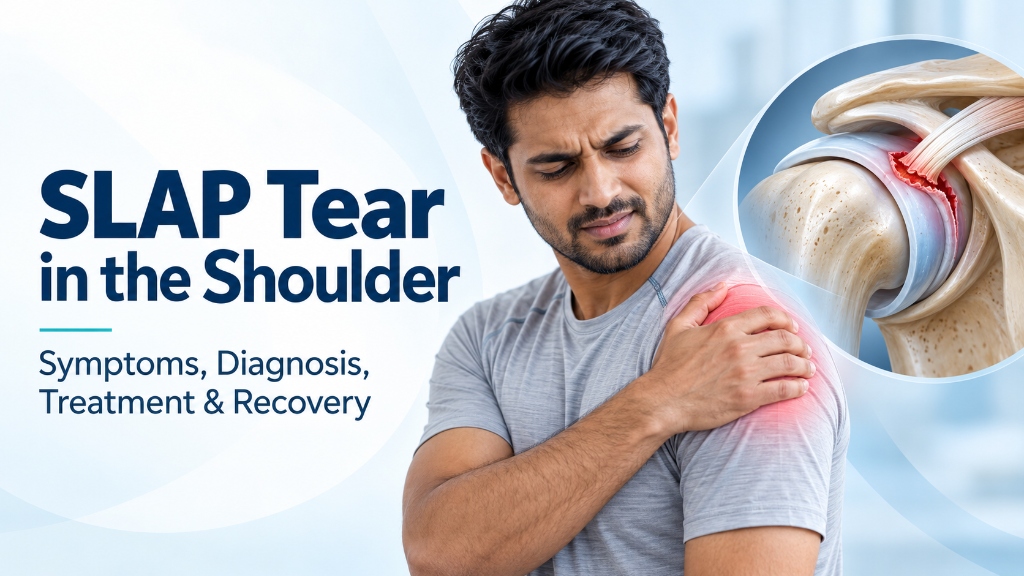
The shoulder is a highly mobile joint. Its socket is surrounded by a ring of strong cartilage called the labrum, which helps provide stability. A SLAP tear occurs when the upper portion of this cartilage becomes damaged. SLAP stands for Superior Labrum Anterior to Posterior, meaning the injury extends across the top of the shoulder socket, from front to back. This area is particularly important because it is also where the long head of the biceps tendon attaches. Depending on the injury, the tear may affect the labrum alone or involve the biceps attachment.
Recognising the Symptoms of a SLAP Tear
SLAP tear symptoms are not always obvious. Some patients develop pain immediately after an injury, while others notice discomfort gradually. Common symptoms include:
-
Deep shoulder pain during lifting or overhead movements
-
Clicking, catching, or popping sensations
-
Weakness when throwing, pulling, or lifting
-
Reduced shoulder movement
-
Discomfort during sports or gym workouts
-
A feeling of instability or reduced control
However, clicking alone does not necessarily indicate a torn labrum. Rotator cuff injuries, biceps tendon problems, and other shoulder conditions can produce similar symptoms, making a proper clinical examination important.
How Is a SLAP Tear Diagnosed?
A shoulder specialist will usually begin by discussing how your symptoms started and examining your shoulder movement, strength, and stability. Special tests, such as the O’Brien test, may help assess the possibility of a labral injury. However, no single physical examination test can reliably confirm a SLAP tear.
Imaging may be recommended when the findings suggest a structural injury.
-
MRI: A standard MRI can help assess the labrum, biceps tendon, rotator cuff, and surrounding tissues.
-
MR arthrogram: This involves injecting contrast material into the shoulder joint before MRI imaging. It may reveal certain labral injuries more clearly when a standard MRI is inconclusive.
An important point: labral changes can sometimes appear on MRI in people without significant symptoms, particularly with increasing age. Therefore, scan findings must be interpreted alongside the clinical examination.
SLAP Tear Treatment in Bangalore: Is Surgery Always Necessary?
For many patients, non-surgical treatment is the first approach.
Non-Surgical Treatment
Treatment may include:
1. Activity modification: Temporarily reducing painful overhead movements, heavy lifting, or repetitive throwing can help settle symptoms.
2. Physiotherapy: A structured programme focuses on restoring movement, strengthening the rotator cuff and shoulder-blade muscles, and improving shoulder control.
3. Pain management: Medication may be recommended when appropriate. Selected patients may benefit from an injection to reduce inflammation and facilitate rehabilitation.
4. Gradual return to activity: Sports and gym activities are reintroduced according to strength, comfort, and functional progress.
Non-surgical rehabilitation may continue for approximately three to six months, depending on the injury.
When is Surgery Recommended?
Surgery may be considered when persistent pain or functional limitations remain despite appropriate rehabilitation. The decision depends on the type of tear, age, activity level, associated injuries, and the patient’s goals. Arthroscopic SLAP repair and biceps tenodesis are among the possible surgical procedures. Neither is automatically appropriate for every patient. The objective is not simply to treat an MRI finding. It is to address the problem affecting your shoulder function.
Frequently Asked Questions About SLAP Tear Treatment in Bangalore
1. What is a SLAP tear in the shoulder?
A SLAP tear is an injury to the upper portion of the shoulder’s labrum, where the long head of the biceps tendon attaches. The tear may develop after trauma, repetitive strain, or age-related tissue changes. Some tears cause significant pain and weakness, while others produce relatively few symptoms. Treatment depends on how the injury affects shoulder function.
2. What are the symptoms of a SLAP tear?
Common symptoms include deep shoulder pain, clicking, catching, weakness, and discomfort during overhead activities. Athletes may notice reduced throwing strength or difficulty completing familiar movements. However, these symptoms overlap with rotator cuff and biceps tendon problems. A shoulder specialist can help identify the source of pain.
3. What causes a SLAP tear — sports, falls, overhead work, or ageing?
Several factors can contribute. Repetitive overhead movements during cricket, swimming, badminton, and weight training may stress the labrum. A fall onto an outstretched hand, sudden pulling injury, or shoulder dislocation can also cause damage. In adults, especially after the age of 30–40, labral fraying may occur as part of age-related changes. These changes do not always require treatment.
4. How is a SLAP tear diagnosed, and where can I get an MRI or MR arthrogram in Bangalore?
Diagnosis combines medical history, clinical examination, and imaging when necessary. Your surgeon may perform shoulder tests, including the O’Brien test, to help assess labral involvement. A standard MRI is often used initially. An MR arthrogram may be considered when additional detail is required. In Bangalore, facilities advertising arthrogram or MR arthrogram services include Apollo Hospitals and Cadabam’s Diagnostics. Before booking, confirm that the specific branch offers a shoulder MR arthrogram with intra-articular contrast, rather than only a routine shoulder MRI. It is advisable to consult a shoulder specialist before choosing the scan.
5. Can a SLAP tear heal on its own?
A torn labrum does not always heal back to its original structure without treatment. However, this does not mean that surgery is unavoidable. Some people experience significant improvement in pain, strength, and shoulder function through rehabilitation, even if structural changes remain visible on imaging. Treatment is guided by symptoms and functional limitations rather than the MRI report alone.
6. Can a SLAP tear be treated without surgery?
Yes. Many patients begin with conservative treatment. This may involve physiotherapy, activity modification, pain medication, and selected injections. The aim is to strengthen the muscles supporting the shoulder and improve movement control. Physiotherapy programmes are individually designed because certain exercises may aggravate one patient’s symptoms while benefiting another.
7. When is surgery needed for a SLAP tear?
Surgery may be considered when shoulder pain or weakness continues despite a suitable rehabilitation programme. Other factors include a significant traumatic injury, associated shoulder instability, and persistent limitations affecting work or competitive sports. The surgeon should explain whether arthroscopic repair, biceps tenodesis, another procedure, or continued rehabilitation is most appropriate. Seeking a second opinion is reasonable when the diagnosis or proposed operation remains unclear.
8. What is SLAP repair surgery, and how long does recovery take?
SLAP repair is generally performed using shoulder arthroscopy. A small camera and specialised instruments are introduced through small incisions. When repair is appropriate, the surgeon may reattach the torn labrum using sutures and anchors. After surgery, patients may need a sling for approximately two to six weeks. Physiotherapy progresses from protected movement to strengthening and functional training. Many patients require several months of rehabilitation. Return to demanding overhead sports may take six months or longer, sometimes extending towards a year. The timeline varies with the operation, injury, and individual progress.
9. What exercises help or hurt a SLAP tear?
Exercises that may be incorporated into rehabilitation include:
- Gentle, pain-free shoulder mobility exercises
- Shoulder-blade stabilisation exercises
- Rotator cuff strengthening
- Posture and movement-control exercises
During painful phases, activities such as heavy overhead presses, deep bench presses, throwing drills, or loaded movements that reproduce pain may need modification. There is no universal list of exercises suitable for every SLAP tear. A physiotherapist should guide progression based on symptoms, strength, and the stage of healing.
10. Can I return to cricket, swimming, badminton, or the gym after SLAP tear treatment?
Many patients can return to recreational or competitive activities after suitable treatment and rehabilitation. However, the timeline depends on whether the injury was treated surgically or non-surgically. For cricket players, this may involve gradual throwing and bowling drills. Swimmers may need to rebuild shoulder endurance before returning to demanding strokes. Badminton players must regain controlled overhead movement, while gym users may need to modify pressing and pulling exercises initially. Return to sport should be based on pain, shoulder movement, strength, and functional readiness — not simply the number of weeks since treatment. A return to the same competitive performance level cannot be guaranteed.
When Should You Consult a Shoulder Specialist?
Consider an orthopaedic evaluation if shoulder pain persists, keeps returning during sports, or interferes with work, sleep, or routine activities. An injury involving sudden substantial weakness, deformity, or an inability to move the arm should be assessed promptly. Early evaluation can help distinguish a SLAP injury from other shoulder conditions and determine whether imaging or rehabilitation is appropriate.
Conclusion
A SLAP tear can be frustrating, particularly when it prevents you from playing your favourite sport, exercising, or performing ordinary daily tasks. Fortunately, SLAP tear treatment in Bangalore includes both non-surgical and surgical approaches. Physiotherapy and activity modification may provide meaningful improvement for many patients. Others may benefit from arthroscopic treatment when symptoms persist or the injury warrants surgery. The important first step is identifying whether the labral tear is genuinely responsible for your symptoms and developing a treatment plan around your individual needs.