Bankart Repair Recovery in Bangalore: What to Expect After Surgery
If your shoulder has dislocated more than once, you probably know how unsettling it feels. Even after the pain settles, there may be a constant worry about the shoulder slipping out again. A Bankart repair is performed to restore stability to the shoulder by repairing the damaged tissue that helps hold the joint in place. But surgery is only one part of the treatment. A successful recovery also depends on protecting the repair and following the right rehabilitation programme. One of the most common questions patients ask is, “When can I start using my shoulder normally again?” The answer depends on several factors, but understanding the recovery timeline can make the process much easier.
How Long Does Bankart Repair Recovery Take?
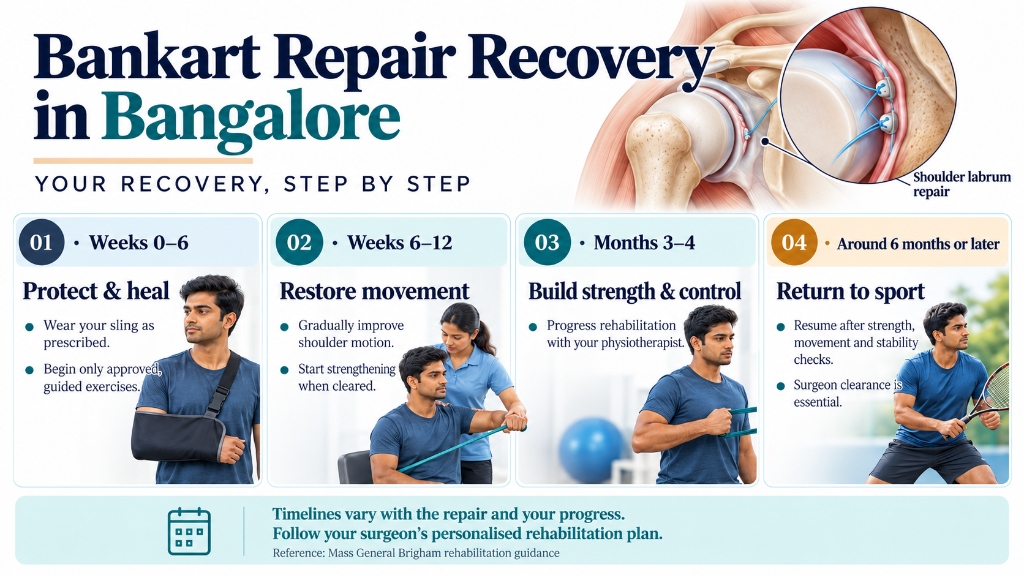
Most patients need approximately 4–6 months to recover sufficiently for demanding activities after Bankart repair surgery. Returning to contact sports or competitive overhead sports may take six months or longer. However, recovery happens in stages. During the first few weeks, the priority is allowing the repaired tissues to heal. Gradually, physiotherapy helps restore shoulder movement, strength and stability. The exact timeline depends on the extent of the injury, the type of repair, associated shoulder damage and individual healing.
Bankart Repair Recovery: Week-by-Week Rehabilitation Timeline
Week 1: Protecting the Repair
During the first week, some pain, swelling and discomfort are expected. Your shoulder will usually be supported in a sling to protect the repaired tissue.
What to focus on:
-
Wear the sling as instructed.
-
Take prescribed medications.
-
Apply ice as advised to reduce swelling.
-
Move your fingers, wrist and elbow as permitted.
-
Avoid lifting, pushing or reaching with the operated arm.
At this stage, the goal is healing, not regaining shoulder movement quickly.
Week 2: Managing Pain and Starting Gentle Movement
By the second week, pain and swelling generally begin to improve. Your surgeon may review the wounds and assess your recovery. Depending on the surgical repair, supervised gentle shoulder movements may be introduced. These exercises should remain within the limits prescribed by your surgeon. Do not attempt to stretch the shoulder independently, even if you feel comfortable.
Weeks 3–4: Continuing Protected Rehabilitation
The repaired tissues are still healing. You may feel more confident performing simple daily activities, but the shoulder remains vulnerable to sudden movements. Physiotherapy may include carefully controlled movements to prevent excessive stiffness. Avoid reaching behind your back, lifting objects or rotating your arm outward beyond the permitted range. The sling is usually continued until your surgeon advises otherwise.
Weeks 5–6: Gradually Regaining Shoulder Movement
This is an important transition period. Depending on healing and surgical instructions, the sling may be gradually discontinued. Physiotherapy begins focusing more on restoring shoulder movement. Activities may include assisted shoulder exercises and gentle muscle activation. Although the shoulder may feel considerably better, lifting heavy objects and sudden overhead movements are still restricted.
Weeks 7–8: Improving Mobility and Muscle Control
As healing progresses, rehabilitation gradually becomes more active. Your physiotherapist may introduce light resistance exercises to strengthen the muscles supporting the shoulder. The emphasis is on controlled movement rather than heavy strengthening. Patients often notice improvements in everyday activities such as dressing, eating and working at a desk.
Weeks 9–12: Building Strength and Stability
During this phase, physiotherapy focuses on improving muscle strength, shoulder control and functional movement. Exercises may target the rotator cuff and shoulder blade muscles. Light resistance training may be introduced or progressed under supervision. However, push-ups, heavy lifting, contact sports and strenuous gym workouts should still be avoided unless specifically cleared.
Months 3–4: Returning to More Activities
Many patients regain better shoulder movement and confidence during this period. Depending on their progress, they may gradually resume modified gym activities, light recreational exercise and selected sport-specific drills. Overhead movements and activities involving sudden shoulder rotation require particular care.
Months 4–6 and Beyond: Returning to Sports
The final stage focuses on improving strength, endurance and shoulder stability. Sport-specific rehabilitation helps prepare the shoulder for activities such as cricket, badminton, swimming and competitive sports. Contact sports and unrestricted overhead activities generally require more time. Returning to sports should depend on strength, movement, stability and surgeon clearance—not simply the number of months since surgery.
Frequently Asked Questions About Bankart Repair Recovery
1. What is a Bankart tear and Bankart repair surgery?
A Bankart tear is an injury to the labrum, a ring of cartilage around the shoulder socket that helps keep the joint stable. It commonly occurs when the shoulder dislocates forward. Bankart repair surgery involves reattaching the torn tissue to the shoulder socket, usually through keyhole surgery using small instruments and suture anchors. The aim is to restore shoulder stability and reduce the risk of repeated dislocations.
2. How long does recovery take after Bankart repair?
The typical Bankart repair recovery time in Bangalore is approximately 4–6 months for return to many demanding activities. Most patients experience gradual improvements in comfort and everyday function during the first 6–12 weeks. Recovery for competitive sports, particularly contact or overhead sports, may take six months or longer.
3. What does week-by-week rehabilitation look like after Bankart repair?
Rehabilitation progresses through different stages:
-
Weeks 1–4: Protection, pain management and permitted gentle movements.
-
Weeks 5–6: Gradual improvement in shoulder mobility.
-
Weeks 7–8: Controlled movements and early strengthening.
-
Weeks 9–12: Progressive strengthening and stability exercises.
-
Months 3–6: Advanced strengthening and gradual return to sports.
The rehabilitation programme should always be individualised.
4. How long do I need to wear a sling after Bankart repair?
Most patients wear a sling for approximately 4–6 weeks following Bankart repair. The duration depends on the surgical technique, tissue condition and surgeon’s rehabilitation protocol. Removing the sling too early or using the shoulder excessively may place unnecessary stress on the repair.
5. When can I drive after Bankart repair in Bangalore?
Driving a car may be possible around 4–6 weeks after surgery, although some patients require longer. You must be out of the sling, off sedating pain medication and able to steer and respond safely in an emergency. Surgeon clearance is essential. Two-wheelers require additional caution. Riding a bike or scooter involves balancing, sudden braking, handlebar control and exposure to bumps. In Bangalore traffic, returning to two-wheeler riding may require 8–12 weeks or longer, depending on recovery and shoulder control.
6. When can I return to work after Bankart repair?
For patients working in Bangalore’s IT sector or desk-based jobs, limited work may be possible within 2–4 weeks if pain is controlled and the operated arm remains protected. However, some patients may need 4–6 weeks, particularly when daily commuting is involved. Jobs requiring lifting, manual labour or repetitive overhead movements may require approximately 3–6 months before unrestricted duties.
7. When can I return to sports after Bankart repair?
Return-to-sport timelines vary depending on the activity and rehabilitation progress.
| Activity | Approximate Return |
|---|---|
| Modified gym workouts | 3–4 months |
| Swimming | 3–6 months, depending on stroke |
| Cricket | 4–6 months or longer |
| Badminton | 4–6 months or longer |
| Contact sports | 6 months or longer |
These are general estimates, not automatic clearances. Bowling, throwing, swimming strokes and overhead badminton shots may require additional rehabilitation. Your surgeon should assess shoulder strength, stability and movement before allowing unrestricted sports.
8. What are the signs of re-dislocation after Bankart repair, and when should I call my surgeon?
Possible warning signs include:
-
Sudden severe shoulder pain following movement or injury.
-
A sensation that the shoulder has slipped out.
-
Visible change in shoulder shape.
-
Sudden inability to move the arm normally.
-
New weakness, numbness or tingling.
If you suspect a complete dislocation, seek urgent medical attention and do not attempt to push the shoulder back yourself. Fever, increasing wound redness or discharge also require prompt medical review.
9. What should I avoid during Bankart repair recovery?
During the early recovery period, avoid heavy lifting, sudden jerking movements, pushing yourself up using the operated arm and reaching excessively behind your back. You should also avoid aggressive stretching, especially rotating the arm outward while it is raised sideways. Do not rush into gym workouts or discontinue physiotherapy simply because the pain has improved.
10. How do I sleep comfortably after shoulder surgery?
Sleeping can be uncomfortable during the first few weeks after Bankart repair. Sleeping on your back in a slightly reclined position often helps. You can place pillows behind your upper back and beneath the operated arm to provide support. Alternatively, you may sleep on your non-operated side with pillows supporting the operated arm, if comfortable and permitted. Avoid sleeping directly on the operated shoulder. Wear your sling while sleeping for as long as your surgeon recommends.
Conclusion
Recovery after Bankart repair takes patience, but understanding what to expect can make the journey less stressful. The first few weeks are about protecting the surgical repair. Over the following months, physiotherapy gradually helps restore movement, strength and confidence. One important point to remember is that less pain does not necessarily mean the shoulder has completely healed. Following your surgeon’s rehabilitation advice and avoiding an early return to demanding activities can help reduce the risk of further injury.