
/
Advanced Frozen Shoulder Treatment in Bangalore
Overcome severe shoulder joint stiffness, eliminate sleep-disrupting night pain, and regain full arm mobility with evidence-based care from leading Bangalore shoulder specialist Dr. Pradyumna R.
1. What is Frozen Shoulder (Adhesive Capsulitis)?
Frozen shoulder, clinically known as adhesive capsulitis, is a debilitating condition where the protective connective tissue surrounding your shoulder joint the joint capsule becomes severely inflamed, thickened, and tight. As scar tissue (adhesions) builds up inside the joint, the lubricating synovial fluid decreases, locking the shoulder in place.
Key Sign: Active vs. Passive Motion Loss
Unlike routine muscle strains, rotator cuff tendinitis, or shoulder bursitis, frozen shoulder causes a dramatic reduction in both:
- Active Range of Motion: When you try to lift or rotate your arm yourself.
- Passive Range of Motion: When an orthopedic specialist attempts to move your arm for you while your muscles are completely relaxed.
If you struggle with inability to reach behind your back, fasten clothing, or lift your arm past shoulder height, you may be suffering from adhesive capsulitis.
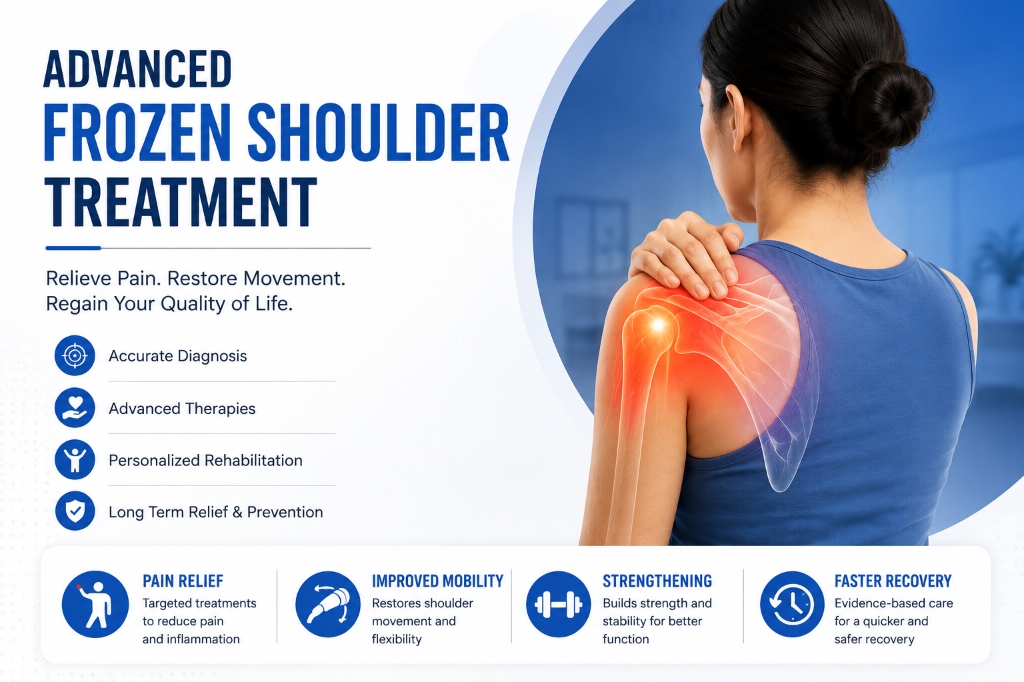
Advanced Frozen Shoulder Treatment & Care Pathway
Recognizing the 3 Clinical Stages
Frozen shoulder develops progressively across three distinct phases. Identifying your exact stage allows Dr. Pradyumna R to tailor a targeted treatment plan:
| Stage | Name | Duration | Primary Symptoms & Impact |
|---|---|---|---|
| Stage 1 | Freezing Phase | 6 to 9 months | Severe night shoulder pain, sharp catch when moving arm, progressive stiffness. |
| Stage 2 | Frozen Phase | 4 to 6 months | Pain stabilizes slightly, but severe shoulder joint stiffness sets in; daily tasks become severely limited. |
| Stage 3 | Thawing Phase | 6 to 24 months | Pain decreases significantly; shoulder joint flexibility and mobility gradually return. |
Causes and Secondary Risk Factors
While frozen shoulder can appear spontaneously (idiopathic), certain health conditions significantly increase your susceptibility:
- Diabetes Mellitus: Diabetic patients have a 10% to 20% higher risk of developing adhesive capsulitis, often experiencing prolonged recovery times.
- Prolonged Shoulder Immobilization: Keeping the joint stationary after an arm fracture, stroke, rotator cuff tear, or surgeries (such as open-heart or breast cancer surgery).
- Thyroid & Metabolic Conditions: Both hyperthyroidism and hypothyroidism affect collagen structure and trigger capsular inflammation.
- Co-Existing Shoulder Pathology: Often presents alongside subacromial bursitis, calcific tendonitis, or bicipital tendinitis.
- Age & Gender: Most commonly affects adults aged 40 to 60, with higher prevalence in women.
Comprehensive Diagnostic Evaluation
To differentiate frozen shoulder from arthritis or rotator cuff tears, Dr Pradyumna R conducts a comprehensive evaluation at his Bangalore shoulder clinic:
Clinical Physical Examination
Testing internal/external rotation, arm abduction, and passive shoulder motion.
Digital Shoulder X-Rays
Done to rule out underlying glenohumeral osteoarthritis, bone spurs, or joint dislocation.
High-Resolution MRI / Ultrasound
Evaluates soft tissues to check for hidden rotator cuff tears or severe joint capsule thickening.
Tailored Treatment Pathway
Over 90% of frozen shoulder cases resolve successfully without invasive surgery when guided by a shoulder specialist.
1
Phase 1: Non-Surgical Conservative Management
First-line care for Stages 1 & 2.
- Anti-Inflammatory Medications (NSAIDs): To reduce acute joint swelling and ease sleep-disrupting night pain.
- Ultrasound-Guided Corticosteroid Injections: Precise placement of medication directly into the joint capsule to quickly break the inflammation cycle.
- Targeted Physical Therapy: Gentle, pain-free range-of-motion stretching customized by a specialized shoulder physiotherapist.
2
Phase 2: Advanced Minimally Invasive Interventions
For persistent stiffness unresponsive to therapy.
- Hydrodilatation (Capsular Distension): Controlled injection of sterile fluid under high pressure to gently expand the tight joint capsule.
- Manipulation Under Anesthesia (MUA): Gentle mobilization of the shoulder joint under light anesthesia to break down scar tissue safely.
- Arthroscopic Capsular Release: Keyhole shoulder surgery where specialized micro-instruments release tight sections of the contracted capsule.
3
Phase 3: Post-Procedure Shoulder Rehabilitation
Securing long-term joint flexibility.
- Immediate physical therapy starting within 24 hours post-procedure to maintain newly gained motion and prevent re-stiffening.
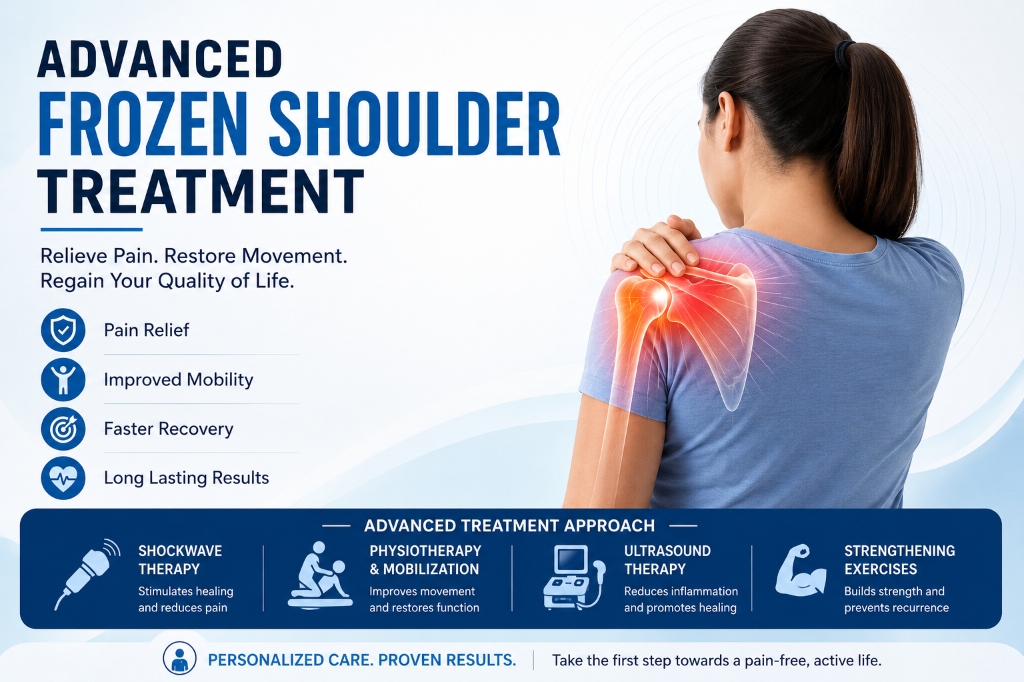
Advanced Treatment Approach: Shockwave & Physiotherapy
Doctor-Recommended At-Home Mobility Exercises
Note: Always warm up your shoulder with a heating pad or warm shower for 10–15 minutes before stretching.
Pendulum Stretch
Lean forward, allowing your affected arm to hang freely. Gently swing the arm in small circles (10 clockwise, 10 counterclockwise).
Finger Wall Crawl
Stand facing a wall. Walk your index and middle fingers up the wall as high as comfortable without forcing sharp pain, hold for 10 seconds, and walk down.
Towel Stretch
Hold a towel behind your back with both hands. Use your uninjured arm to pull the lower hand gently upward toward your shoulder blade.
Cross-Body Stretch
Lift your affected arm at the elbow using your uninjured hand, bringing it gently across your chest for 15–20 seconds.
Relieve Pain. Restore Movement. Reclaim Your Life.
How to Identify Frozen Shoulder vs. Other Conditions
A critical gap on most websites is failing to help patients distinguish frozen shoulder from other common conditions. Use this comparison table:
| Condition | Active Motion (Self-Lift) | Passive Motion (Doctor Lifts) | Key Differentiating Symptom |
|---|---|---|---|
| Frozen Shoulder | Severely Restricted | Severely Restricted | Joint feels "locked" or mechanically stuck in all directions. |
| Rotator Cuff Tear | Weak & Painful | Usually Full | Weakness when lifting arm; doctor can lift arm for you. |
| Shoulder Bursitis | Painful at Mid-Range | Mild Pain | Pain during specific arcs of motion, but no physical joint block. |
| Shoulder Arthritis | Restricted | Restricted | Grinding sensation (crepitus) visible on standard X-rays. |
Red Flags: When to Seek Immediate Medical Attention
Seek urgent medical evaluation if your shoulder pain is accompanied
by:
- Sudden, severe joint swelling, redness, or heat around the shoulder.
- Unexplained high fever or chills (could indicate joint infection/septic arthritis).
- Progressive numbness, tingling, or loss of motor function radiating down the arm into the hand.
- Severe trauma or immediate inability to move the arm following a fall.

Kanakapura
Road - Bengaluru
Dr. Pradyumna R
Consultant - Arthroscopy, Knee & Shoulder Surgery, Robotic TKR, Joint Replacement Surgeon, and Sports Medicine Specialist
Qualification: MBBS | MS (Ortho) | Fellowship in Arthroscopy & Sports Medicine | Fellowship in Shoulder & Elbow Surgery (Germany)
Languages Spoken:
EnglishKannadaHindiTeluguTamil
ORTHOPAEDIC & ARTHROSCOPIC SURGEON, SPORTS MEDICINE SPECIALIST WITH 15+ YEARS EXPERIENCE
I am a Consultant Orthopaedic Surgeon and Sports Medicine Specialist in Bangalore with over 13 years of experience, specializing in arthroscopic (keyhole) and minimally invasive procedures. I combine advanced surgical expertise with a deep understanding of the patient experience. I take time to listen carefully to my patients and provide personalized treatment options.
15+ YearsExperience
2,000+Shoulder Scopes
5,000+Surgeries
ISAKOSFellowship
Frequently Asked Questions (FAQs)
1. What is the difference between frozen shoulder and a rotator cuff tear?
Frozen shoulder (adhesive capsulitis) causes severe loss of both active and passive range of motion, meaning neither you nor your doctor can move your arm. In contrast, a rotator cuff tear typically causes sharp pain and muscle weakness when lifting your arm actively, but a doctor can still move your arm passively through its full range of motion.
2. What are the earliest warning signs of frozen shoulder?
The earliest warning sign is a dull, aching pain deep inside the shoulder joint that gradually worsens over several weeks. This is frequently accompanied by sharp, catching pain when reaching behind your back (e.g., reaching for a seatbelt or fastening clothing) and increasing difficulty sleeping on the affected side.
3. How can I sleep comfortably with a frozen shoulder at night?
To relieve night pain, sleep on your back or on your uninjured side. Place a supportive pillow beneath the elbow and forearm of your affected arm to keep the shoulder joint elevated and slightly forward. This prevents gravity from pulling the arm backward, which strains the inflamed joint capsule during sleep.
4. Why is frozen shoulder more common in people with diabetes?
Diabetic individuals have a 10% to 20% higher risk of developing frozen shoulder due to a process called advanced glycation. High blood sugar levels cause sugar molecules to attach to collagen fibers in the joint capsule, making the connective tissue stiffer, thicker, and more prone to severe inflammation.
5. Can frozen shoulder heal naturally on its own without treatment?
While frozen shoulder is classically considered a self-limiting condition that can resolve over 12 to 24 months, leaving it untreated often leads to long-term loss of joint flexibility and prolonged, severe night pain. Early clinical treatment and targeted physical therapy significantly shorten recovery time.
6. What happens during a hydrodilatation procedure for frozen shoulder?
Hydrodilatation (capsular distension) is a minimally invasive, non-surgical procedure performed under local anesthesia. An orthopedic specialist uses ultrasound guidance to inject a sterile solution of saline, local anesthetic, and anti-inflammatory medication into the shoulder joint. The hydraulic pressure gently stretches and expands the tightened joint capsule from the inside.
7. How effective are steroid injections for frozen shoulder pain?
Ultrasound-guided corticosteroid injections are highly effective, particularly during Stage 1 (the Freezing Phase). They deliver targeted anti-inflammatory medication directly into the joint capsule, providing rapid relief from severe night pain and reducing swelling so patients can participate in physical therapy.
8. What are the best daily exercises for frozen shoulder recovery?
The most effective early mobility exercises include:
- Pendulum Stretch: Leaning forward and gently swinging the hanging arm in small circular motions.
- Finger Wall Crawl: Walking your index and middle fingers up a wall to gradually stretch shoulder abduction.
- Towel Stretch: Holding a towel behind your back to gently pull the affected arm upward toward your opposite shoulder blade.
9. Should I keep exercising if a shoulder stretch causes pain?
You should feel a gentle, tolerable stretch during exercise, but you should never force movement into sharp or severe pain. Pushing through severe pain can cause micro-tears in the inflamed joint capsule, triggering further tissue inflammation and delaying recovery.
10. When is keyhole shoulder surgery (arthroscopic capsular release) required?
Keyhole shoulder surgery is considered only when severe joint stiffness and pain fail to improve after 3 to 6 months of dedicated conservative therapy, hydrodilatation, or steroid injections. During the procedure, a shoulder specialist uses micro-instruments to precisely cut and release the contracted capsule tissue.
11. What is the recovery time after arthroscopic capsular release surgery?
Most patients experience immediate relief from deep capsular tension following arthroscopic release. Full functional recovery typically takes 6 to 12 weeks of structured post-operative physical therapy to rebuild shoulder strength and preserve newly gained mobility.
12. Can frozen shoulder affect both arms at the same time or later on?
Yes. Approximately 20% to 30% of people who experience frozen shoulder in one arm eventually develop it in the opposite shoulder. This risk is notably higher in individuals with underlying diabetic or thyroid conditions. However, it rarely reoccurs in the same shoulder twice.
13. How do thyroid disorders contribute to frozen shoulder?
Both hyperthyroidism (overactive thyroid) and hypothyroidism (underactive thyroid) alter systemic hormone levels that regulate tissue metabolism and inflammation. This metabolic imbalance affects collagen turnover in connective tissue, increasing susceptibility to joint capsule contraction.
14. What is Manipulation Under Anesthesia (MUA) for frozen shoulder?
Manipulation Under Anesthesia (MUA) is a minor procedure where a patient is placed under light, brief anesthesia so their muscles are fully relaxed. The orthopedic specialist then gently moves the shoulder joint through its full range of motion to break down restrictive scar tissue adhesions without making surgical incisions.
15. Is a shoulder X-ray or MRI needed to diagnose adhesive capsulitis?
An X-ray cannot show frozen shoulder directly, but it is necessary to rule out underlying arthritis, bone spurs, or joint dislocation. An MRI or musculoskeletal ultrasound is used to inspect soft tissue, measuring joint capsule thickening and ruling out co-existing rotator cuff tears.
16. Why does frozen shoulder pain get significantly worse at night?
Night pain increases due to reduced circulating cortisol levels in the evening, combined with changes in blood flow when lying flat. In a resting position, fluid redistributes within the tight joint capsule, increasing intra-articular pressure and stimulating pain receptors in the inflamed tissue.
17. Can posture or prolonged desk work cause a frozen shoulder?
Poor posture alone does not directly cause frozen shoulder, but prolonged slouched sitting causes rounded shoulders and subacromial impingement. Over time, poor shoulder biomechanics can irritate soft tissues and contribute to capsular stiffness, especially after a period of joint inactivity.
18. How long does the "Frozen Phase" (Stage 2) usually last?
The Frozen Phase typically lasts between 4 to 6 months. During this stage, acute inflammatory pain may begin to subside, but joint stiffness reaches its peak. Simple activities like brushing hair, putting on a jacket, or reaching overhead become severely restricted.
19. What should I avoid doing when recovering from a frozen shoulder?
Avoid heavy overhead lifting, sudden jerky arm movements, pushing through sharp joint pain during workouts, and keeping your arm immobilized in a sling for prolonged periods without medical advice. Keeping the joint completely still actually worsens capsule tightening.
20. How do I choose the best shoulder specialist in Bangalore for frozen shoulder?
Choose an orthopedic specialist who focuses specifically on shoulder arthroscopy, joint preservation, and sub-specialized upper limb rehabilitation. Look for a doctor who emphasizes exhaustively exploring advanced non-surgical options (such as hydrodilatation and targeted physical therapy) before recommending surgical procedures.
Advanced Orthopaedic Care
Trusted Orthopaedic Expertise
Patient Trust
Clinical Experience
15+ Years Experience20,000+ Happy Patients | Fellowship Trained at TUM, Germany
Surgical Volume
Surgical Track Record
5,000+ Surgeries PerformedKnee & Shoulder Arthroscopy | Joint Replacement | Trauma & Robotic Surgery
Awards
Recognized for Excellence
Outlook Award Winner 2024 & 2025Best Orthopedic & Joint Replacement Surgeon - South India