
Robotic Knee Replacement Surgeon Bangalore
Who May Need Robotic Knee Replacement?
A person may be evaluated for robotic knee replacement when knee arthritis or joint damage causes persistent pain, stiffness, deformity or difficulty walking despite appropriate non-surgical treatment.
The decision is not based on an X-ray alone. Dr. Pradyumna evaluates the patient's symptoms, physical examination, imaging results, general health, treatment history and personal mobility goals before recommending surgery.
Robotic technology assists with planning and execution, but the orthopaedic surgeon remains in control throughout the procedure.
What Is Robotic Knee Replacement Surgery?
Robotic knee replacement is a form of partial or total knee replacement performed with the assistance of computer-guided robotic technology.
The system creates or uses a digital model of the patient's knee. This model helps the surgeon plan:
The amount of damaged bone to be removed
The size and position of the implant
The alignment of the leg
The balance of the ligaments around the knee
The movement of the reconstructed joint
During surgery, the technology provides real-time information and controlled boundaries that assist the surgeon in carrying out the planned bone preparation and implant positioning.
The robot does not make independent decisions or perform the operation without the surgeon. Dr. Pradyumna plans the surgery, controls the instruments, evaluates ligament balance and decides the final implant position.
What Conditions Can Robotic Knee Replacement Treat?
Robotic-assisted knee replacement may be considered for:
Advanced Knee Osteoarthritis
Osteoarthritis gradually damages the cartilage covering the knee joint. As the protective cartilage wears away, the bones may rub against each other, causing pain, swelling, stiffness and reduced movement.
Rheumatoid Arthritis
Rheumatoid arthritis can damage the cartilage, bone and soft tissues surrounding the knee. Knee replacement may be considered when joint destruction causes severe symptoms despite appropriate medical treatment.
Post-Traumatic Arthritis
A previous fracture, ligament injury or major knee trauma can alter joint mechanics and lead to arthritis several years later.
Knee Deformity
Advanced arthritis may cause bow-legged or knock-kneed alignment. Replacement surgery may help correct the damaged joint and improve functional alignment.
Osteonecrosis
Reduced blood supply to part of the bone can cause bone collapse and secondary joint damage. Treatment depends on the extent of the affected area and the patient's age and symptoms.
Failed Previous Knee Treatment
Replacement may be considered when physiotherapy, medication, activity modification, injections or previous joint-preserving procedures no longer provide adequate relief.
Symptoms That Need an Orthopaedic Evaluation
Consult an orthopaedic surgeon when you experience:
- Knee pain during walking or standing
- Pain while climbing or descending stairs
- Persistent pain at night or while resting
- Morning stiffness or stiffness after sitting
- Recurrent swelling around the knee
- Reduced ability to bend or straighten the knee
- A grinding or catching sensation
- Bow-legged or knock-kneed deformity
- Difficulty getting out of a chair
- Reduced walking distance
- Dependence on pain medication
- Loss of independence in routine activities
Urgent medical evaluation is needed when knee pain follows a major injury, the knee becomes suddenly red and hot, fever accompanies joint swelling, or the person cannot bear weight.
How Is Severe Knee Arthritis Diagnosed?
A proper diagnosis includes more than reviewing a scan.
1. Medical History
The doctor asks about:
- Duration and location of pain
- Activities that increase symptoms
- Previous injuries or operations
- Previous physiotherapy or injections
- Medicines currently being used
- Diabetes, heart disease or other health conditions
- Effect of knee pain on work, sleep and daily life
2. Physical Examination
The examination may assess:
- Walking pattern
- Knee alignment
- Swelling and tenderness
- Range of motion
- Ligament stability
- Muscle strength
- Hip and ankle movement
- Circulation and nerve function
3. Weight-Bearing X-rays
Standing X-rays can show joint-space loss, bone changes, deformity and the compartments affected by arthritis.
4. Additional Imaging
MRI or CT imaging may be advised when the diagnosis is unclear, when a partial knee replacement is being considered, or when further anatomical information is required.
5. Preoperative Assessment
Before surgery, blood tests, heart evaluation, anaesthesia assessment and management of existing health conditions may be required.
Is Surgery Always Necessary?
No. Knee replacement should not be recommended solely because arthritis appears on an X-ray.
Depending on the diagnosis and severity, non-surgical treatment may include:
- Activity modification
- Weight management
- Strengthening exercises
- Supervised physiotherapy
- Pain-relieving or anti-inflammatory medication
- Walking aids
- Knee braces
- Intra-articular injections
- Management of diabetes and other medical conditions
- Joint-preserving surgery in selected patients
The purpose of treatment is not merely to delay surgery. It is to select the option that provides an appropriate balance of symptom relief, function, safety and long-term joint health.
Who Is a Suitable Candidate?
A patient may be considered for robotic knee replacement when:
- Knee pain significantly affects daily activities
- Arthritis is advanced on clinical and imaging assessment
- Symptoms persist despite appropriate non-surgical care
- Walking, sleep, work or independence is affected
- Joint stiffness or deformity is progressing
- The patient understands the procedure and rehabilitation
- Medical conditions are sufficiently controlled for surgery
- Expected benefits outweigh the individual surgical risks
Who May Need Further Treatment Before Surgery?
Surgery may be delayed or reconsidered when there is:
- An active infection
- Uncontrolled diabetes
- Unmanaged heart or lung disease
- Severe skin problems near the knee
- A high risk of blood clots
- Poor dental or general infection control
- Severe muscle weakness requiring rehabilitation
- Unrealistic expectations about recovery
- Inability to participate in postoperative physiotherapy
Age alone does not determine eligibility. The decision depends on pain, joint damage, general health, activity requirements and the likely benefit of treatment.
Robotic Versus Conventional Knee Replacement
| Feature | Robotic-assisted replacement | Conventional replacement |
|---|---|---|
| Surgical planning | Digital and anatomy-based planning | Standard imaging and surgical planning |
| Intraoperative guidance | Real-time computer guidance | Mechanical instruments and surgeon assessment |
| Implant positioning | Guided by the digital plan and surgeon decisions | Guided by conventional instruments and surgeon decisions |
| Ligament assessment | Dynamic information may assist balancing | Manual clinical assessment and conventional instruments |
| Surgeon control | Surgeon remains fully responsible | Surgeon remains fully responsible |
| Recovery | Depends on the patient, surgery and rehabilitation | Depends on the patient, surgery and rehabilitation |
| Suitability | Not necessary for every patient | Effective for many appropriately selected patients |
Robotic assistance may support precise bone preparation, implant positioning and personalised planning. It does not guarantee a pain-free result, faster recovery or a longer-lasting implant. Outcomes still depend on patient selection, surgical judgement, implant choice, medical health and rehabilitation.
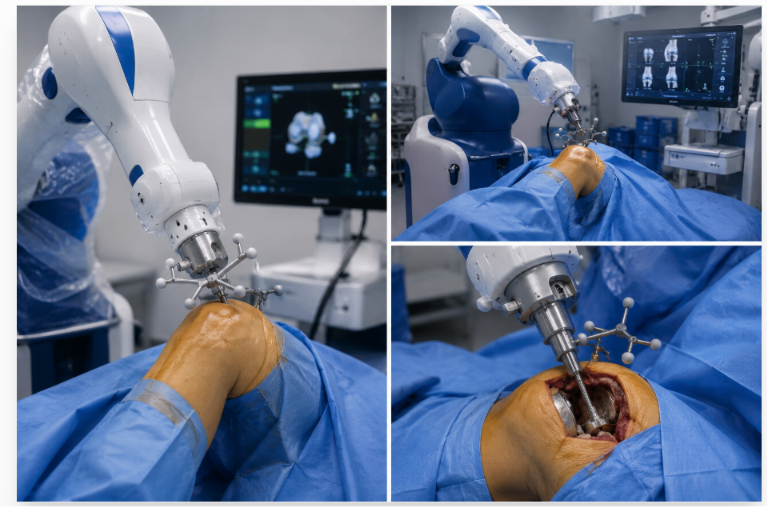
Robotic Knee Surgery: Optical Tracking & Real-Time Navigation
Types of Robotic Knee Replacement
Robotic Total Knee Replacement
Total knee replacement resurfaces the damaged areas of the knee using metal components and a medical-grade polyethylene insert. It may be advised when arthritis affects multiple knee compartments.
Robotic Partial Knee Replacement
Partial knee replacement treats only the damaged compartment while preserving unaffected bone, ligaments and joint surfaces. It is suitable only when arthritis is limited to a specific part of the knee and the remaining joint structures are healthy.
Robotic Bilateral Knee Replacement
Both knees may sometimes be replaced during the same admission. Bilateral surgery is considered only after reviewing age, heart and lung health, mobility, home support and anaesthesia risk.
Staged replacement, in which the knees are operated on separately, may be safer for some patients.
Step-by-Step Robotic Knee Replacement Procedure
Step 1: Consultation and Diagnosis
Dr. Pradyumna reviews symptoms, previous treatments, physical findings and imaging. Non-surgical and surgical choices are discussed before a final recommendation is made.
Step 2: Preoperative Planning
The surgical team plans implant size, alignment and the amount of bone preparation required. The exact process depends on the robotic system used.
Step 3: Medical and Anaesthesia Assessment
Blood tests, heart evaluation and other investigations are performed according to the patient's health. Existing conditions and medications are reviewed.
Step 4: Anaesthesia
Knee replacement may be performed under spinal or general anaesthesia. Regional pain-control techniques may also be used.
Step 5: Surgical Exposure
An incision is made over the knee. The surgeon carefully exposes the damaged joint while protecting important soft tissues.
Step 6: Registration and Verification
Anatomical landmarks are registered with the robotic system. The digital plan is checked against the patient's actual knee.
Step 7: Ligament and Alignment Assessment
The surgeon evaluates the knee through different positions. This information helps determine alignment and soft-tissue balance.
Step 8: Bone Preparation
Damaged cartilage and a controlled amount of bone are removed within the planned boundaries.
Step 9: Trial Components
Trial implants are inserted. The surgeon checks movement, stability, alignment and ligament balance.
Step 10: Final Implant Placement
The final components are secured after the surgeon confirms the plan and knee movement.
Step 11: Closure and Recovery
The wound is closed and the patient is moved to the recovery area. Pain control, circulation and general condition are monitored.
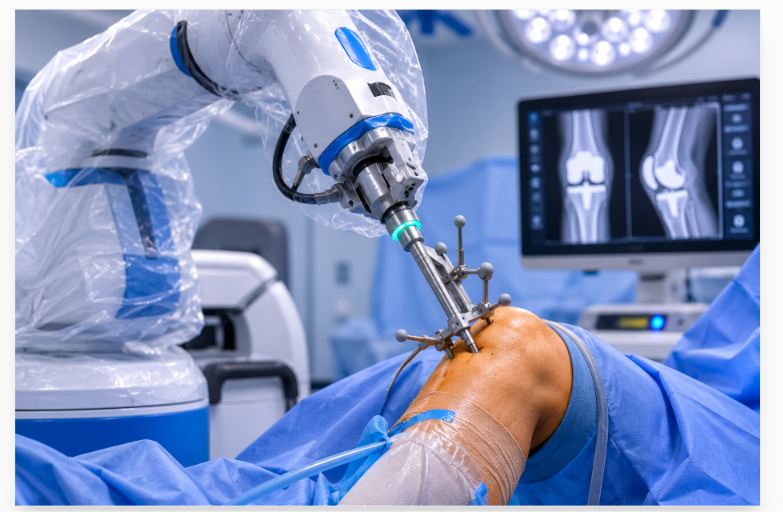
Robotic Arm Sub-Millimeter Precision Bone Preparation
What Happens After Surgery?
Recovery begins with pain management, swelling control and safe mobilisation.
Depending on the patient's medical condition, the rehabilitation team may assist with standing and walking on the day of surgery or the following day.
The early programme may include:
- Ankle movements
- Breathing exercises
- Quadriceps activation
- Knee bending and straightening
- Walking with a walker
- Safe transfer from bed to chair
- Stair training before discharge when necessary
- Instructions for wound care and medication
Robotic Knee Replacement Recovery Timeline
Recovery varies according to age, muscle strength, general health, type of replacement, pain control and participation in physiotherapy.
| Period | Typical recovery goals |
|---|---|
| First 24-48 hours | Pain control, standing and assisted walking when medically safe |
| Days 3-7 | Regular exercises, swelling management and short walks |
| Weeks 2-3 | Wound review, improved confidence and gradually increasing activity |
| Weeks 3-6 | Greater independence in routine activities and reduced dependence on walking aids |
| Weeks 6-12 | Progressive strengthening, balance work and improved walking endurance |
| Three to six months | Continued gains in strength, comfort and function |
| Six to twelve months | Ongoing improvement may continue depending on the individual |
Many patients can resume common daily activities within approximately three to six weeks, although full recovery may take several months or longer.
Do not compare your recovery directly with another patient. Healing speed differs, and trying to progress too quickly can increase pain, swelling or fall risk.
Potential Benefits
Robotic-assisted knee replacement may offer:
- Personalised preoperative planning
- Real-time information during surgery
- Controlled bone preparation
- Support for implant positioning
- Detailed assessment of alignment
- Assistance with ligament balancing
- Preservation of healthy structures where appropriate
- A documented surgical plan
Robotic-assisted joint replacement combines three-dimensional planning with real-time computer navigation, while the surgeon remains responsible for the operation and treatment decisions.
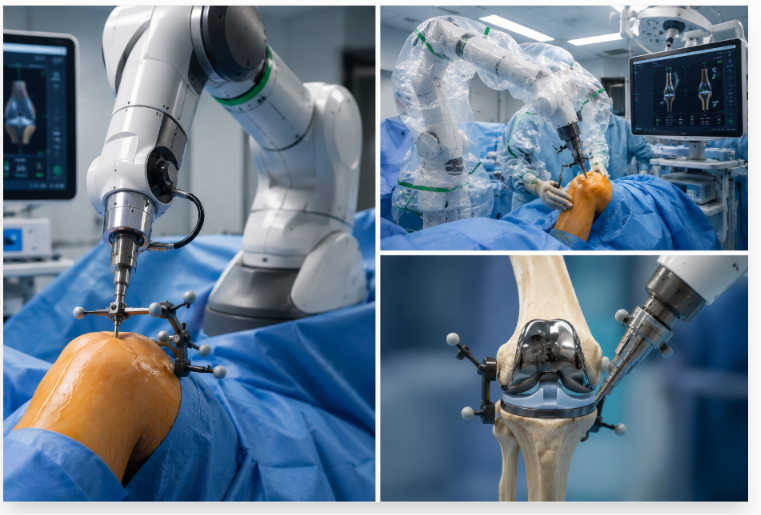
Robotic 3D Joint Navigation & Implant Alignment
Limitations of Robotic Surgery
Patients should also understand that:
- Robotic surgery is not automatically necessary for every knee replacement
- The system does not replace the surgeon
- Recovery is not guaranteed to be painless or faster
- Final results depend on rehabilitation and general health
- Some patients may still experience stiffness or residual discomfort
- Robotic technology may increase the package cost
- Insurance may not cover every additional technology-related charge
- Revision surgery may still be required in the future
Risks of Knee Replacement Surgery
All operations carry risks. Possible complications include:
- Infection
- Blood clots
- Bleeding
- Anaesthesia-related complications
- Nerve or blood-vessel injury
- Persistent pain
- Knee stiffness
- Reduced range of movement
- Implant loosening or wear
- Fracture around the implant
- Instability
- Delayed wound healing
- Need for revision surgery
Serious complications are uncommon, but patients must receive an individual risk assessment. AAHKS advises patients that knee replacement is primarily intended to relieve pain and may not eliminate every symptom; stiffness, swelling and medical complications can occur.
How Much Does Robotic Knee Replacement Cost in Bangalore?
The cost of robotic knee replacement in Bangalore varies according to the hospital, implant, robotic technology, room category, medical condition and insurance coverage. A written estimate is provided after consultation and preoperative assessment.
The final cost depends on:
- Total or partial replacement
- One knee or both knees
- Robotic platform and consumables
- Implant brand and design
- Hospital selected
- Room category
- Surgeon and anaesthesia charges
- Preoperative investigations
- Existing medical conditions
- Duration of hospital stay
- Medicines and postoperative support
- Physiotherapy requirements
- Insurance approval and exclusions
Recent Bangalore hospital estimates demonstrate that knee-replacement pricing varies widely according to hospital, implant, technology and patient requirements.
Patients should request a written estimate showing what is included and excluded before confirming surgery.
Is Robotic Knee Replacement Covered by Insurance?
Many health-insurance policies cover medically necessary knee replacement. However, coverage differs between insurers, policy types, waiting periods and hospital networks.
The additional cost associated with robotic technology may not always be covered fully. Before admission, patients should ask the insurer or TPA for written clarification regarding:
- Room-rent eligibility
- Implant limits
- Robotic consumables
- Surgeon and anaesthesia fees
- Physiotherapy
- Co-payment
- Non-medical expenses
- Cashless approval
- Pre-existing disease clauses
About Dr. Pradyumna R
Dr. Pradyumna R is an orthopaedic surgeon with a practice focus that includes knee and shoulder arthroscopy, sports injuries, ligament reconstruction, cartilage procedures and robotic joint replacement.
His qualifications and training include:
- MBBS
- MS in Orthopaedics
- Fellowship in Arthroscopy and Sports Medicine under ISAKOS
- Fellowship in Shoulder and Elbow Surgery at TUM, Munich, Germany
- Fellowship in Complex Shoulder Arthroscopy and Arthroplasty at SNUBH, Seoul, South Korea
- FIFA Diploma in Football Medicine
He practices as a Consultant in Shoulder and Sports Medicine at Manipal Hospital, Kanakapura Road. His official hospital profile includes robotic joint replacement among his areas of surgical expertise.
Dr. Pradyumna speaks English, Kannada, Hindi, Telugu and Tamil.
Why Patients Consult Dr. Pradyumna for Knee Replacement
Diagnosis Before Surgery
The objective of consultation is to determine whether the pain is caused by advanced arthritis, a ligament problem, meniscus damage, inflammation or another condition.
Non-Surgical Options Are Considered
Knee replacement is not the first treatment for every patient. Appropriate conservative and joint-preserving options are discussed where relevant.
Personalised Treatment Planning
The procedure is selected according to the compartments affected, ligament condition, alignment, bone quality and functional needs.
Clear Explanation of Expectations
Patients and families are informed about likely benefits, limitations, risks, rehabilitation and expected recovery.
Coordinated Rehabilitation
Surgery is followed by a structured rehabilitation plan covering walking, movement, strength and return to daily activities.
Second-Opinion Consultation
Patients who have already been advised to undergo replacement can bring their X-rays, scans, prescriptions and medical records for an independent assessment.
Where Can You Consult Dr. Pradyumna R?
Bangalore Orthopaedic Clinic
GF-450, Behind MedPlus,
BTM Mico Layout, BTM Layout 2nd Stage,
Bengaluru, Karnataka 560076
Call or WhatsApp: +91 91130 25188
Dr. Pradyumna also has consulting and surgical access through Manipal Hospitals in Kanakapura Road and Jayanagar, Bengaluru. Confirm the current location and appointment schedule while booking.
What Should You Bring to the Consultation?
Bring:
- Recent standing knee X-rays
- MRI or CT scans, when available
- Previous prescriptions
- Details of injections or physiotherapy
- Previous surgery records
- List of current medicines
- Diabetes and blood-pressure records
- Cardiac or other medical reports
- Insurance documents
- A written list of questions
Questions to Ask Before Knee Replacement
Before deciding, ask:
- Is knee replacement necessary now?
- Are non-surgical options still reasonable?
- Do I need partial or total replacement?
- Is robotic assistance appropriate in my case?
- Which implant is being recommended and why?
- What are my personal risk factors?
- How long will I stay in hospital?
- When will walking and physiotherapy begin?
- What help will I need at home?
- Which costs are not included in the package?
- What symptoms after surgery require urgent attention?
Frequently Asked Questions
What is robotic knee replacement surgery?
Robotic knee replacement is a surgeon-controlled knee replacement procedure supported by digital planning and computer-guided technology. The system helps the surgeon plan bone preparation, implant position, alignment and ligament balance according to the patient's anatomy.
Does the robot perform the operation by itself?
No. The robotic system does not independently diagnose the condition, choose the implant or perform the operation. The orthopaedic surgeon plans the procedure, controls the instruments and makes every important clinical decision.
Is robotic knee replacement better than conventional surgery?
Robotic assistance can provide detailed planning and intraoperative guidance. However, both robotic and conventional knee replacements can provide good outcomes when appropriately selected and performed. The better option depends on the patient, surgeon, hospital resources and treatment plan.
Who is a suitable candidate?
Suitable candidates commonly have advanced arthritis, significant pain, reduced mobility and inadequate improvement after non-surgical treatment. Final eligibility is determined after clinical examination, standing X-rays and medical assessment.
Is there a minimum or maximum age?
There is no single age cut-off. Symptoms, joint damage, general health, bone quality, activity needs and expected benefit are more important than age alone.
Can younger patients undergo robotic knee replacement?
Yes, but replacement in a younger patient requires careful consideration because implants may eventually wear and revision surgery may be required. Joint-preserving treatment should be considered whenever appropriate.
What is the difference between partial and total knee replacement?
Partial replacement treats only one damaged knee compartment. Total replacement resurfaces the main damaged joint surfaces. Partial replacement is suitable only when arthritis is limited and the remaining knee structures are healthy.
What tests are needed before surgery?
Tests may include standing knee X-rays, blood tests, ECG, chest evaluation and anaesthesia assessment. Additional tests are selected according to age, medical history and hospital protocol.
How long does robotic knee replacement take?
The operation often takes approximately one to two hours for one knee, but the duration varies according to the procedure, anatomy, deformity and medical requirements.
Which anaesthesia is used?
Spinal anaesthesia, general anaesthesia or a combination of regional pain-control techniques may be used. The anaesthesiologist recommends the safest option after reviewing the patient's health.
When can I walk after surgery?
Many patients begin standing and walking with assistance on the day of surgery or the following day when medically safe. The exact timing depends on pain control, muscle strength, blood pressure and general condition.
How long is the hospital stay?
Hospital stay commonly ranges from a few days, but it varies according to recovery, surgery type, medical conditions, home support and hospital protocol.
How painful is knee replacement recovery?
Pain, swelling, bruising and sleep disturbance are common during early recovery. Medication, ice, elevation, movement and physiotherapy are used to manage symptoms. Pain should gradually improve rather than worsen.
When can I climb stairs?
Stair training often begins before discharge when needed. Patients should use the technique taught by the physiotherapy team and continue using the railing or walking aid until strength and balance improve.
When can I drive?
Driving may be considered after the patient is no longer using sedating medication, can enter and exit the vehicle safely and can perform an emergency stop. Clearance from the surgeon is required.
Can I sit cross-legged or squat after surgery?
Some patients may achieve sufficient movement for certain floor-level activities, but this cannot be guaranteed. Deep squatting and repeated high-load flexion may not be advisable. Expectations should be discussed before surgery.
How long does a knee implant last?
Modern knee implants are designed for long-term use, but lifespan varies. Implant position, body weight, activity, bone quality, infection, injury and wear can influence how long the replacement functions.
Can a person with diabetes undergo knee replacement?
A person with diabetes may undergo surgery when blood glucose is adequately controlled and other risks are assessed. Poorly controlled diabetes can increase infection and wound-healing risks.
Can both knees be replaced together?
Simultaneous bilateral replacement may be considered for selected medically fit patients. Others may be advised to undergo staged operations to reduce physical and medical stress.
What is the cost of robotic knee replacement in Bangalore?
The cost of robotic knee replacement in Bangalore varies according to the hospital, implant, robotic technology, room category, medical condition and insurance coverage. A written estimate is provided after consultation and preoperative assessment.
Is robotic knee replacement covered by insurance?
Medically necessary knee replacement is covered by many policies, but robotic technology charges may be subject to limits or exclusions. Written pre-authorisation should be obtained from the insurer.
Can I get a second opinion from Dr. Pradyumna?
Yes. Patients can bring their X-rays, scans, prescriptions and previous recommendations for review. A second opinion can help clarify whether replacement is necessary and whether partial, total, robotic or non-surgical treatment is appropriate.
Book an Appointment
Persistent knee pain does not always mean that replacement is necessary. A complete evaluation can determine whether symptoms can be managed through physiotherapy, medication, injections, joint-preserving treatment or knee replacement.
Consult Dr. Pradyumna R for a detailed knee assessment in Bangalore.
Call or WhatsApp: +91 91130 25188
Clinic: Bangalore Orthopaedic Clinic, BTM Layout, Bengaluru
Medical Disclaimer
This page provides general patient education and does not replace examination, diagnosis or individual medical advice. Treatment recommendations, cost, hospital stay and recovery differ between patients. Seek urgent medical care for sudden severe pain, fever with a hot swollen joint, breathing difficulty, chest pain or symptoms of a blood clot.