
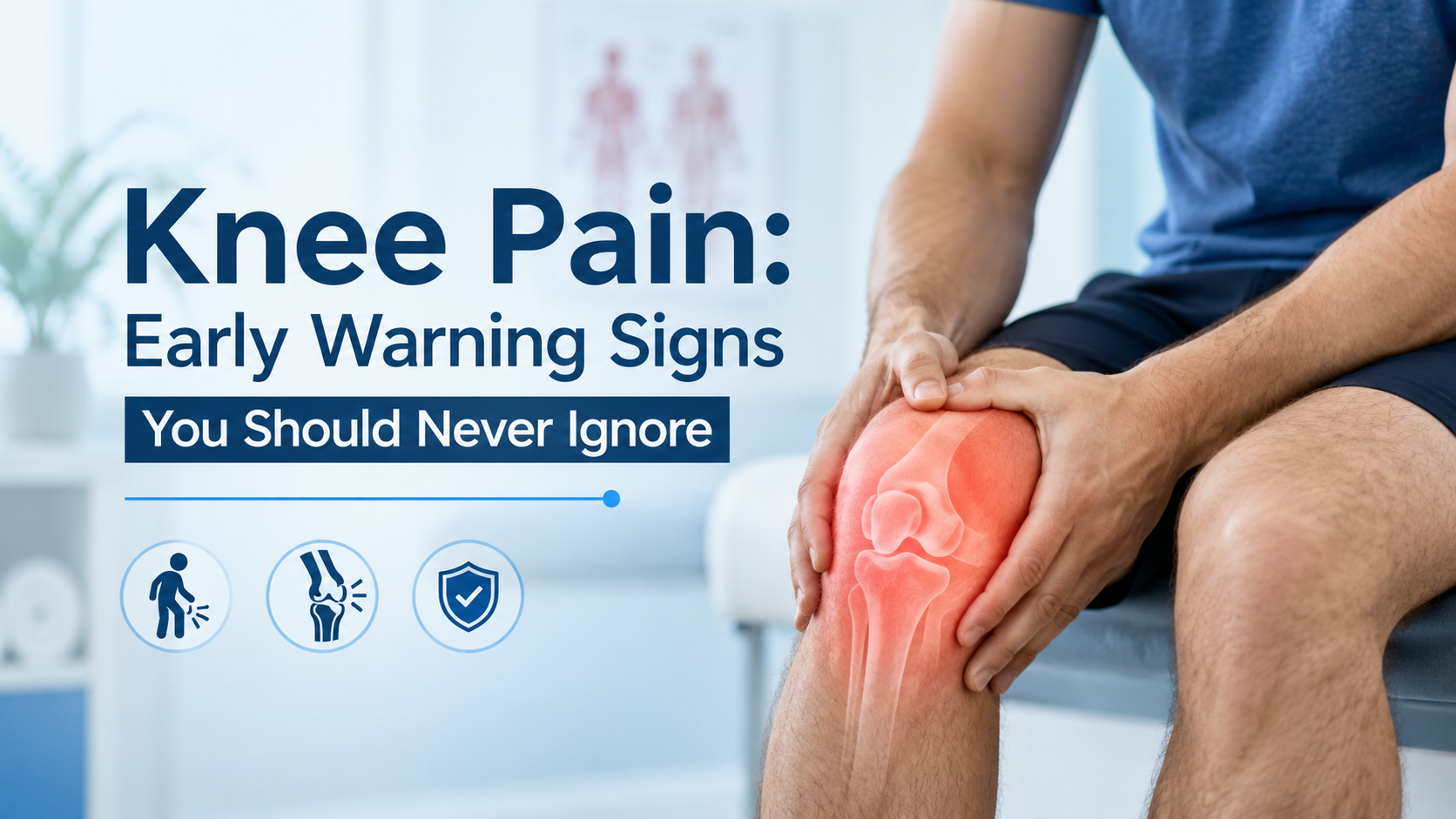
Knee pain is one of the most common musculoskeletal complaints affecting people of all ages. Whether you’re a young athlete, a working professional, or an older adult, knee discomfort can significantly impact your daily activities and quality of life. While occasional soreness after strenuous activity may not be a cause for concern, persistent or recurring knee pain should never be ignored.
Many serious knee conditions begin with subtle symptoms that worsen over time if left untreated. Recognizing these early warning signs and seeking timely medical attention can help prevent long-term joint damage and improve treatment outcomes.
1. Persistent Knee Pain Lasting More Than a Few Weeks
It is normal to experience temporary knee soreness after intense physical activity or minor injuries. However, pain that persists for more than two to three weeks despite rest, ice, and activity modification may indicate an underlying problem such as:
- Meniscus tears
- Ligament injuries
- Cartilage damage
- Early arthritis
- Patellofemoral pain syndrome
Ignoring persistent pain can allow these conditions to progress, potentially leading to more complex treatment requirements in the future.
2. Swelling Around the Knee
Swelling is often the body’s response to inflammation or injury. If your knee appears swollen, feels tight, or becomes difficult to bend fully, it may signal:
- Ligament injuries such as ACL or PCL tears
- Meniscal injuries
- Synovitis
- Cartilage damage
- Early osteoarthritis
Sudden swelling occurring within a few hours after an injury should be evaluated promptly, as it may indicate bleeding inside the joint or a significant ligament injury.
3. Clicking, Locking, or Catching Sensations
Many people occasionally hear harmless clicking sounds from their knees. However, frequent clicking accompanied by pain, locking, or a sensation that the knee gets “stuck” should not be ignored. These symptoms may suggest:
- Meniscal tears
- Loose cartilage fragments
- Patellar tracking disorders
- Early degenerative changes
Mechanical symptoms often indicate structural problems within the knee that may worsen without appropriate treatment.
4. Instability or the Knee Giving Way
If your knee feels unstable or suddenly buckles while walking, climbing stairs, or changing direction, it may indicate ligament insufficiency. Common causes include:
- ACL injuries
- PCL injuries
- MCL injuries
- Chronic ligament laxity
Instability not only affects confidence during movement but also increases the risk of further injury to cartilage and surrounding structures.
5. Pain While Climbing Stairs or Squatting
Pain experienced specifically during activities such as climbing stairs, squatting, kneeling, or getting up from a chair often points toward problems involving the kneecap and surrounding cartilage. Potential causes include:
- Patellofemoral pain syndrome
- Chondromalacia patella
- Early cartilage wear
- Malalignment of the kneecap
Early intervention through physiotherapy and activity modification can often prevent progression to chronic pain.
6. Morning Stiffness or Reduced Range of Motion
Difficulty straightening or bending the knee fully, particularly after waking up or sitting for prolonged periods, may be an early sign of:
- Osteoarthritis
- Inflammatory arthritis
- Cartilage degeneration
- Joint inflammation
Many patients mistakenly attribute stiffness to aging and delay seeking care until symptoms become severe. Early evaluation can help preserve joint function and mobility.
7. Pain During Sports or Exercise
Athletes and active individuals frequently push through discomfort, assuming it will resolve on its own. However, pain during running, jumping, pivoting, or sports-specific movements may indicate:
- ACL injuries
- Meniscal tears
- Cartilage injuries
- Tendon disorders
- Overuse syndromes
Addressing these issues early often allows for quicker recovery and safer return to sports.
When Should You See an Orthopaedic Specialist?
You should seek professional evaluation if you experience:
- Persistent pain lasting more than two weeks
- Recurrent swelling
- Locking or catching sensations
- Knee instability
- Difficulty walking
- Limited range of motion
- Pain interfering with work, exercise, or daily activities
Early diagnosis allows for more treatment options, many of which can be managed non-surgically through physiotherapy, medications, activity modification, or minimally invasive arthroscopic procedures.
Expert Care for Knee Problems in Bangalore
Timely assessment by a knee specialist can identify the root cause of your symptoms and prevent long-term complications. Modern diagnostic tools, advanced rehabilitation protocols, and minimally invasive arthroscopic techniques have significantly improved outcomes for patients with knee injuries and degenerative conditions.
Consult Dr. Pradyumna R
Dr. Pradyumna R is a Consultant Orthopaedic Surgeon specializing in Sports Medicine, Arthroscopy, Knee Ligament Reconstruction, Meniscus Preservation, Cartilage Restoration, Shoulder Surgery, and Joint Preservation procedures. He provides evidence-based treatment tailored to each patient’s lifestyle, activity level, and long-term goals.
Appointments: +91 91130 25188
Location: Bangalore Orthopaedic Clinic, Bengaluru
Schedule a consultation for expert evaluation and personalized treatment of knee pain, sports injuries, ligament tears, meniscus injuries, shoulder conditions, and early arthritis.
Frequently Asked Questions (FAQs)
1. When should I consult a knee pain specialist in Bangalore?
You should see a specialist if your knee pain lasts longer than two weeks, is accompanied by sudden swelling, causes the knee to buckle, or limits your ability to walk or climb stairs.
2. Is surgery the only option for persistent knee pain?
No, most knee issues can be managed non-surgically. Treatments like physiotherapy, lifestyle modifications, medications, and targeted injections are highly effective. Surgery is typically only recommended when conservative methods fail.
3. What causes my knee to swell suddenly after a sports injury?
Sudden swelling within a few hours of an injury often points to bleeding inside the joint, which is commonly associated with an ACL tear, a severe ligament sprain, or a fracture. Immediate medical evaluation is crucial.
4. Why does my knee click and hurt when I walk?
While painless clicking is usually harmless, clicking that is accompanied by pain, catching, or locking often indicates a structural issue like a meniscal tear, loose cartilage, or early signs of arthritis.
5. Can I exercise if I have knee pain?
It depends on the cause of the pain. Low-impact exercises like swimming or cycling are often safe and beneficial, but you should avoid high-impact activities like running or jumping until a specialist evaluates your knee to prevent further damage.
6. What is the best treatment for early arthritis in the knee?
Early arthritis is highly manageable. A customized plan usually involves weight management, muscle-strengthening physiotherapy, activity modification, and sometimes joint preservation injections to slow down the degeneration.
7. How long does it take to recover from an arthroscopic knee procedure?
Arthroscopy is minimally invasive. Depending on the specific repair, many patients return home the same day, start walking with support immediately, and can resume office work within one to two weeks.
8. How do I book a consultation with Dr. Pradyumna R in Bengaluru?
You can easily schedule a consultation by calling +91 91130 25188 or visiting the Bangalore Orthopaedic Clinic. Dr. Pradyumna R offers personalized evaluations for all sports injuries and degenerative knee conditions.