
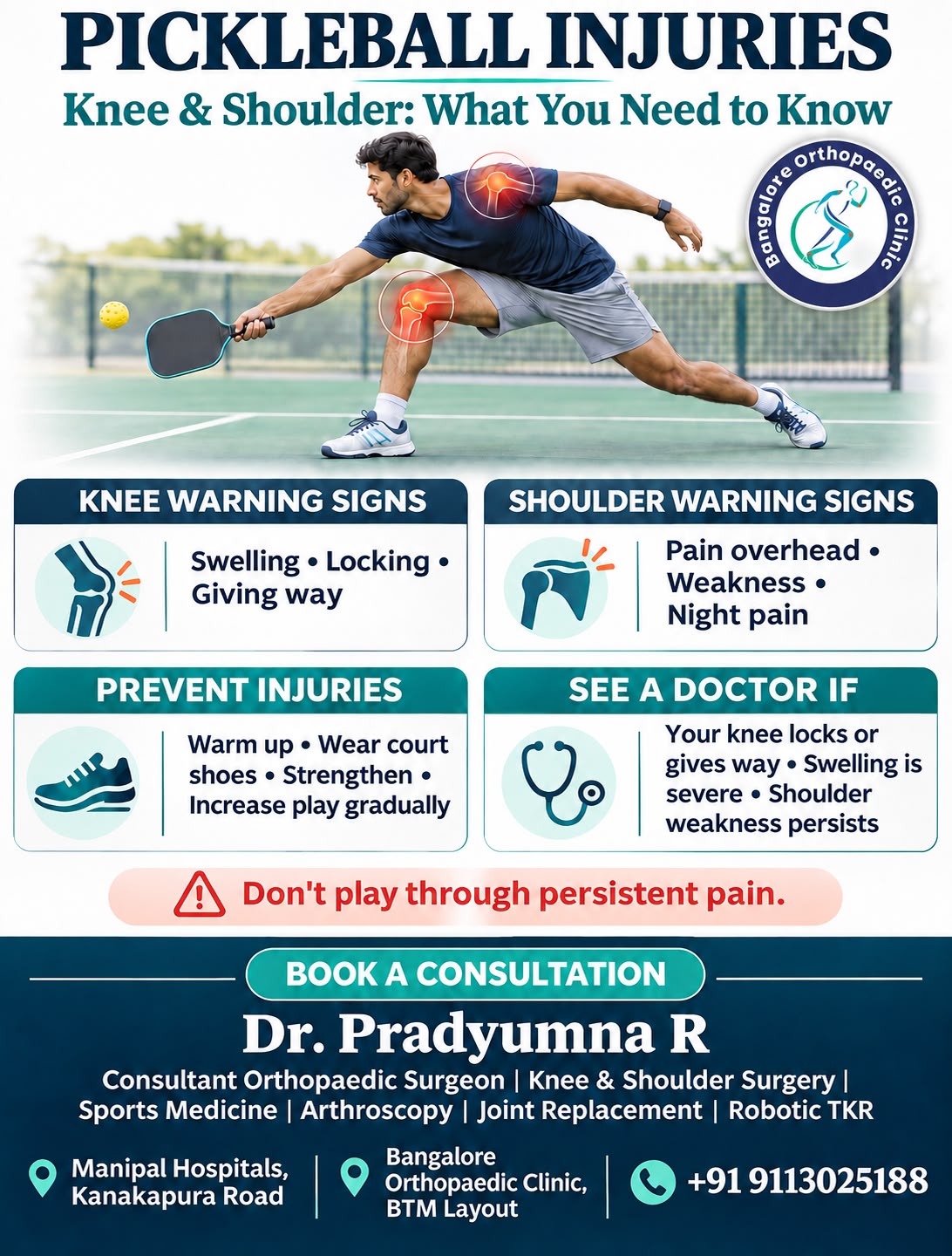
Pickleball is catching on in Bengaluru, from apartment courts to sports clubs. It looks easier than tennis, but quick turns, sudden stops and overhead shots can strain knees and shoulders—especially when returning to sport after a break. Most aches after a game are minor. However, swelling, a knee that gives way or shoulder pain that keeps returning should not be ignored. Knowing the difference can help you get the right pickleball injury treatment in Bangalore and return to playing safely.
Why Does Pickleball Cause Injuries?
The court is small, but players still make repeated sideways movements, lunges and rapid changes of direction. Your feet may stop while your knee continues to twist. Reaching for a high shot can also overload shoulder muscles and tendons. Risk rises with long matches, running shoes instead of court shoes, and intense weekend-only play. Knee arthritis, previous injuries and weak muscles can add to it.
Common Knee Injuries in Pickleball
1. Knee Strains and Tendon Pain
Repeated lunging can irritate the patellar tendon or strain muscles around the joint. Pain is often felt below or around the kneecap.
2. Meniscus Tears
The meniscus is cartilage that cushions the knee. Twisting on a planted foot may injure it, causing joint-line pain, swelling, catching or difficulty straightening the knee.
3. ACL Injuries
Sudden pivoting or awkward landing can injure the anterior cruciate ligament (ACL). A pop, rapid swelling or a feeling that the knee is giving way needs prompt assessment.
4. Arthritis Flare-ups
Repeated movement may trigger pain, stiffness or swelling in people with knee osteoarthritis. A flare-up does not automatically mean worsening joint damage.
Common Shoulder Injuries in Pickleball
Repeated serves, smashes and reaching shots may irritate the rotator cuff, the group of tendons that helps lift and stabilise your shoulder. Tendinitis or bursitis can produce pain when raising the arm or lying on that shoulder. Some players develop shoulder impingement symptoms or a rotator cuff tear after forceful movement. Persistent weakness, difficulty lifting the arm and night pain deserve examination. Not every painful shoulder has a tear, and not every tear requires surgery.
What Should You Do Immediately After a Pickleball Injury?
Stop playing if pain is sharp, your knee feels unstable or movement becomes difficult. For a mild injury:
- Reduce activity and avoid movements that worsen pain.
- Apply an ice pack wrapped in a towel for 15–20 minutes at a time.
- Elevate a swollen knee when resting.
- Avoid returning to play until comfortable movement is restored.
Do not force a locked knee straight, repeatedly test an unstable joint or return to play simply because painkillers have reduced discomfort. If you cannot bear weight, have obvious deformity, severe swelling or sudden inability to lift your arm after an injury, seek urgent medical attention.
How Are Pickleball Injuries Treated in Bangalore?
Treatment begins with understanding how the injury happened and examining joint movement, strength and stability. An X-ray may help identify fractures or assess arthritis. An MRI may be recommended when examination suggests a ligament, meniscus or rotator cuff injury. Not every injury requires an MRI.
Many strains, overuse injuries and certain meniscus or shoulder conditions improve with:
- Activity modification and adequate recovery
- Physiotherapy
- Muscle strengthening
- Balance and movement training
- Gradual return to sports
Selected injuries may require injections or surgery, depending on the diagnosis and severity. ACL reconstruction, meniscus repair or shoulder arthroscopy may be considered when clinically appropriate. Surgery is not automatically necessary because a patient plays pickleball.
Six Ways to Prevent Pickleball Injuries
1. Warm Up Before Playing
Spend 5–10 minutes walking briskly, moving your shoulders and practising sideways steps before starting rallies.
2. Choose Proper Court Shoes
Tennis or pickleball shoes provide support for sideways movements. Ordinary running shoes may be less suitable for sudden changes of direction.
3. Strengthen Your Muscles
Exercises targeting the quadriceps, glutes, calves and rotator cuff help support the knees and shoulders. Balance exercises are also valuable.
4. Learn Proper Movement Techniques
Take smaller adjustment steps, avoid twisting on a fixed foot and learn when to let a difficult shot go.
5. Increase Playing Time Gradually
Start with shorter sessions and allow recovery between games. Avoid suddenly moving from occasional play to long weekend tournaments.
6. Stay Hydrated and Take Breaks
Playing in Bengaluru's warm weather can increase fatigue. Drink enough water and take breaks before tiredness affects your movement.
Frequently Asked Questions About Pickleball Injuries
1. What are the most common pickleball injuries?
Common injuries include ankle sprains, knee strains, meniscus tears, shoulder tendon irritation, elbow pain and injuries from falls. The type of injury depends on movements, fitness and playing technique.
2. Is pickleball bad for your knees?
Not necessarily. Pickleball can provide good physical activity, but sudden turns and lunges place stress on the knees. Proper conditioning and controlled playing time are important, particularly for people with previous knee injuries.
3. Why does my knee hurt after playing pickleball?
Knee pain may result from muscle overuse, kneecap irritation, tendon strain, arthritis or a meniscus injury. Pain accompanied by swelling, locking or instability should be evaluated by an orthopaedic surgeon.
4. Can pickleball cause a meniscus or ACL tear?
Yes. Sudden twisting, pivoting or changing direction can injure the meniscus or ACL. A popping sensation, swelling, knee locking or instability may indicate a significant injury requiring medical assessment.
5. Can pickleball cause shoulder pain or a rotator cuff injury?
Yes. Repetitive overhead shots can irritate shoulder tendons, while sudden forceful movements may cause rotator cuff injuries. Persistent pain, weakness or difficulty lifting the arm requires evaluation.
6. How can I prevent pickleball injuries?
Warm up before playing, wear appropriate court shoes, strengthen knee and shoulder muscles, practise proper footwork, stay hydrated and increase playing time gradually.
7. Is it safe to play pickleball with knee arthritis?
Some people with well-managed knee arthritis can continue playing shorter, modified games. However, if pickleball repeatedly causes swelling or pain, consult an orthopaedic surgeon to determine safe activity levels.
8. Should I stop playing if I have knee or shoulder pain?
Stop playing if the pain is sharp, worsening or affecting movement. Mild soreness that settles with rest may require reduced activity, but recurring pain should be assessed before returning to regular play.
9. When should I see a doctor after a pickleball injury?
Seek urgent medical care if you cannot bear weight, experience severe swelling, notice deformity or lose significant joint movement. Consult an orthopaedic surgeon if your knee locks or gives way, your shoulder becomes weak or pain persists despite rest.
10. Can I play pickleball after knee or shoulder surgery?
Many patients can return to recreational sports after appropriate rehabilitation. However, recovery depends on the type of surgery, tissue healing, muscle strength and joint stability. Return to pickleball only after clearance from your surgeon and physiotherapist.
Conclusion: Enjoy Pickleball Without Ignoring Joint Pain
Pickleball is an enjoyable way to stay active, improve fitness and socialise. However, knee and shoulder injuries can occur when sudden movements, repetitive strain or inadequate conditioning place excessive stress on the joints.
The important thing is recognising when discomfort is ordinary post-game soreness and when it could indicate an underlying injury. Persistent pain, swelling, instability or weakness should not be ignored. Early diagnosis and appropriate treatment can help prevent further complications and support a safe return to sports.
If you are experiencing knee pain, shoulder discomfort or a sports-related injury, consult Dr. Pradyumna R for a thorough orthopaedic evaluation and personalised treatment plan.
Book an Appointment
Dr. Pradyumna R
Consultant Orthopaedic Surgeon | Knee & Shoulder Surgery | Sports Medicine | Arthroscopy | Joint Replacement | Robotic TKR
Consultation Locations:
Manipal Hospitals, Kanakapura Road, Bengaluru
Bangalore Orthopaedic Clinic, BTM Layout, Bengaluru
Appointments: +91 9113025188