
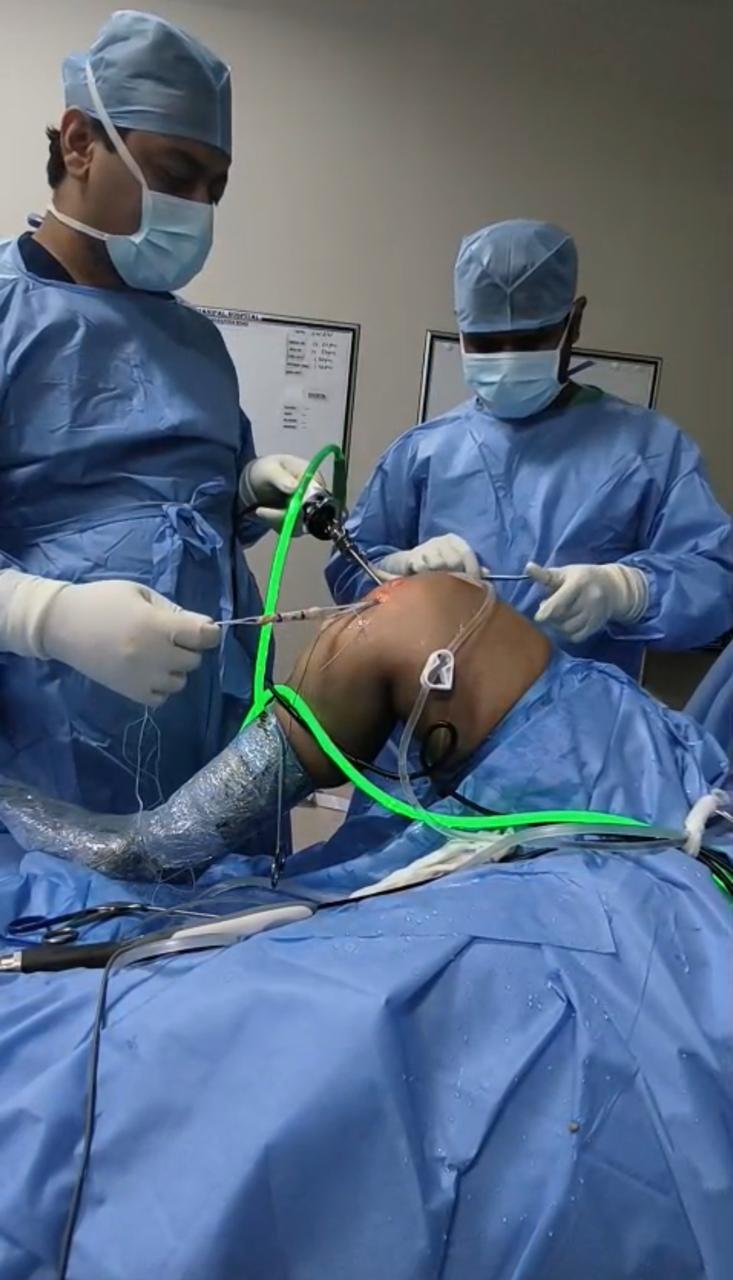
An ACL reconstruction is designed to restore knee stability and help patients return to an active lifestyle. However, in some cases, the reconstructed ligament or ACL graft can become stretched, damaged or torn again. An ACL re-tear can be particularly frustrating for athletes and active individuals who have already completed surgery and months of rehabilitation. Understanding why an ACL graft fails, identifying the cause of failure and planning the right treatment are important before considering another reconstruction. For patients looking for ACL re-tear treatment in Bangalore, evaluation by an orthopaedic surgeon experienced in sports injuries and revision ACL procedures can help determine whether rehabilitation alone is sufficient or ACL revision surgery in Bangalore is required.
What Is an ACL Re-Tear?
During ACL reconstruction, the damaged anterior cruciate ligament is replaced with a graft, usually obtained from the patient's own hamstring, patellar tendon or quadriceps tendon, or occasionally from donor tissue. Over time, the graft incorporates into the knee and functions as the new ACL. An ACL re-tear occurs when this reconstructed ligament is injured again. In some patients, the graft may not completely rupture but can stretch or become functionally insufficient, resulting in recurrent knee instability. This is often referred to more broadly as ACL graft failure.
Why Does an ACL Graft Fail?
There isn't always one single reason. ACL graft failure may result from a combination of a new injury, surgical factors, rehabilitation issues and the patient's individual anatomy.
1. A New Sports Injury
A second twisting or pivoting injury is one of the most common reasons for ACL re-tear. Sports involving sudden direction changes, jumping and landing—such as football, basketball, badminton and other pivoting sports—can place considerable stress on the reconstructed ACL. A direct collision or awkward landing can also damage an otherwise well-healed graft.
2. Returning to Sport Too Early
Feeling better does not necessarily mean the reconstructed ACL is ready for unrestricted sport. The graft continues to undergo biological healing and remodelling for many months after surgery. Returning to high-demand sports before adequate strength, balance, coordination and neuromuscular control have been restored can increase the risk of another injury. Return-to-sport decisions should therefore be based on objective functional testing and recovery rather than time alone.
3. Inadequate Rehabilitation
Successful ACL reconstruction involves much more than the surgery itself. Targeted rehabilitation is essential for restoring:
-
Range of Motion: Knee range of motion restoration
-
Muscle Strength: Quadriceps and hamstring strength
-
Balance & Proprioception: Balance and body awareness
-
Hip & Core: Hip and core muscle strength
-
Jump & Land Mechanics: Jumping and landing mechanics
-
Sport-Specific Patterns: Sport-specific movement patterns
Incomplete rehabilitation may leave the knee vulnerable when the patient returns to demanding activities.
4. Muscle Weakness and Poor Movement Control
Weak quadriceps, hamstrings, hip muscles or poor neuromuscular control can affect how forces are distributed through the knee. The hamstrings are particularly important because they help control forward movement of the shin bone and work dynamically with the ACL. Strengthening these muscle groups is therefore an important part of ACL re-injury prevention in Bangalore and elsewhere.
5. Technical Factors From the First Surgery
Sometimes ACL graft failure is related to technical issues from the initial reconstruction. These may include:
-
Tunnel Positioning: Suboptimal femoral or tibial tunnel positioning
-
Graft Tension: Improper graft tension
-
Fixation Problems: Issues with fixation devices
-
Graft Impingement: Graft impingement within the joint
-
Missed Injuries: Unrecognised associated ligament injuries
Tunnel position is particularly important because the reconstructed ACL needs to reproduce the natural anatomy and biomechanics of the original ligament. Revision surgery requires careful assessment of the previous reconstruction before a new graft is placed.
6. Unrecognised Meniscus or Other Ligament Injuries
The ACL does not work independently. Damage to the meniscus, collateral ligaments (such as the MCL) or other stabilising structures can increase stress on an ACL graft. In some patients with recurrent instability, these associated problems need to be addressed during revision surgery. For a comparison of symptoms, read our guide on ACL vs. Meniscus tear differences.
7. Individual Knee Anatomy
Certain anatomical factors can contribute to repeated ACL injuries. For example, some patients may have increased posterior tibial slope or other structural characteristics that increase forces acting on the ACL. An ACL reconstruction specialist in Bangalore may therefore evaluate the overall alignment and anatomy of the knee, particularly in patients who have experienced repeated graft failures.
How Do You Know If You Have Re-Torn Your ACL?
Symptoms can resemble those experienced during the original ACL injury. Common warning signs include:
-
Popping Sensation: A popping sensation during a new injury
-
Sudden Pain: Sudden knee pain after pivoting or twisting
-
Swelling: Swelling after twisting or pivoting
-
Knee Instability: A feeling that the knee is unstable
-
Buckling: Knee buckling or “giving way” during activity
-
Difficulty Cutting: Difficulty changing direction during sport
-
Reduced Confidence: Reduced confidence during sports activities
-
Recurrent Swelling: Recurrent swelling after activity
Not every episode of knee pain after ACL surgery means the graft has failed. Meniscus injuries, cartilage problems, patellar dislocation, and other knee conditions can produce similar symptoms. A clinical examination and imaging are therefore important.
How Is an ACL Re-Tear Diagnosed?
Diagnosis usually begins with a detailed history of the original ACL surgery, rehabilitation and the circumstances surrounding the new symptoms. The orthopaedic surgeon will examine knee stability and may perform tests such as the Lachman test and pivot-shift test.
-
MRI Scan: Assess the ACL graft, meniscus, cartilage and other ligaments
-
X-Rays: Evaluate tunnel positions and bone structure
-
CT Scan: Assess the size of tunnels from previous reconstruction
-
Clinical Tests: Lachman test and pivot-shift test for stability
What Is ACL Revision Surgery?
ACL revision surgery is a repeat ACL reconstruction performed when a previous ACL graft has failed and the patient continues to experience clinically significant instability. Revision surgery can be more complex than primary ACL reconstruction because the surgeon needs to understand exactly why the first reconstruction failed. Factors that may need to be considered include:
-
Previous Tunnels: Previous bone tunnel positions and widening
-
Fixation Devices: Existing fixation devices from first surgery
-
Graft Selection: Available graft choices for revision
-
Meniscus & Cartilage: Meniscus condition and cartilage damage
-
Associated Instability: Associated ligament instability
-
Knee Alignment: Knee alignment and anatomy assessment
In some patients, revision ACL reconstruction can be performed as a single-stage procedure. In others, particularly when previous tunnels are significantly enlarged or poorly positioned, a staged procedure may be considered. The old tunnels may first need bone grafting before a new ACL reconstruction is performed later. This is why choosing a surgeon experienced in revision and complex sports-knee procedures is important when considering ACL revision surgery in Bangalore.
Graft Options for Revision ACL Surgery
The graft selected for revision surgery depends on what was used during the first procedure, the patient's age, activity level, anatomy and available graft tissue. Options may include:
-
Quadriceps Tendon Graft: Often preferred for revision cases
-
Patellar Tendon Graft: Bone-patellar tendon-bone autograft
-
Hamstring Tendon Graft: Hamstring autograft option
-
Allograft: Donor tissue in selected situations
There is no single graft that is best for every revision ACL patient. The choice should be individualised after evaluating the previous surgery and the patient's sporting requirements.
How Can You Prevent an ACL Re-Tear?
Although no strategy can completely eliminate the possibility of another injury, several measures can reduce risk.
Complete Your Rehabilitation
Do not stop physiotherapy simply because everyday activities feel comfortable. Later stages of ACL rehabilitation are particularly important for athletes.
Rebuild Strength Symmetrically
Both legs should be assessed for strength deficits, particularly the quadriceps, hamstrings, gluteal muscles and calf muscles.
Work on Landing and Cutting Technique
Neuromuscular training can help athletes learn safer movement patterns during jumping, landing, deceleration and rapid changes of direction.
Use Objective Return-to-Sport Testing
Return to sport should not be based solely on the number of months since surgery. Strength testing, hop tests, movement quality, knee stability and psychological readiness may all form part of the decision.
Gradually Increase Sports Exposure
Going directly from rehabilitation exercises to full competitive sport can overload the knee. Training intensity, cutting movements, contact drills and competition should be introduced progressively.
Continue Injury-Prevention Exercises
ACL prevention exercises should continue even after the athlete has returned to sport. Strength, balance, agility and landing drills can remain part of regular training.
ACL Revision Surgery Cost in Bangalore
The ACL revision surgery cost in Bangalore varies depending on several factors, including:
-
Complexity: Complexity of the previous reconstruction
-
Procedure Type: Whether one-stage or two-stage revision is required
-
Graft Selection: Graft selected for the revision procedure
-
Additional Procedures: Additional meniscus or cartilage procedures
-
Implants: Implants and fixation devices required
-
Hospital Category: Hospital and room category chosen
-
Insurance: Insurance coverage available
An accurate cost estimate can generally be provided only after clinical examination and review of previous operative records and imaging.
ACL Re-Tear Treatment in Bangalore – Consult Dr. Pradyumna R
A second ACL injury does not automatically mean another surgery is required. The first step is identifying why the ACL graft failed and whether the knee remains functionally unstable. Dr. Pradyumna R evaluates ACL graft failures, recurrent sports injuries and complex knee instability, with treatment planned according to the patient's knee anatomy, previous reconstruction, activity level and sporting goals.
If you have undergone ACL reconstruction and are experiencing repeated knee giving-way, swelling or instability, a specialist assessment can help determine whether physiotherapy, activity modification or ACL revision surgery in Bangalore is appropriate.
Dr. Pradyumna R
Orthopaedic Surgeon – Sports Medicine, Arthroscopy & Shoulder/Knee Surgery
Bangalore Orthopaedic Clinic
#450, Ground Floor, 6th Main, 7th Cross, Mico Layout (Opposite Third Wave Coffee), BTM Layout 2nd
Stage, Bengaluru, Karnataka – 560076
Phone: +91 91130 25188
Frequently Asked Questions About ACL Re-Tear
1. What causes an ACL to re-tear after surgery?
An ACL can re-tear because of a new twisting or pivoting injury, premature return to sport, inadequate rehabilitation, muscle weakness or surgical and anatomical factors. Determining the cause is an important part of planning treatment.
2. How common is ACL re-tear after reconstruction?
ACL reconstruction is generally successful, but repeat injuries do occur. Risk varies considerably depending on age, activity level, sport, rehabilitation and return-to-sport exposure. Younger athletes participating in pivoting sports tend to have a higher risk of another ACL injury.
3. What are the symptoms of an ACL re-tear?
Symptoms can include a popping sensation, swelling, pain and recurrent instability. Some patients mainly notice that the knee gives way during running, turning or sports.
4. Can a rehabilitated ACL graft fail again?
Yes. Even a successfully rehabilitated and well-functioning ACL graft can be injured again if sufficient force is applied to the knee. Proper rehabilitation reduces risk but cannot eliminate it completely.
5. What is ACL graft failure?
ACL graft failure means the reconstructed ACL no longer provides adequate stability. This can occur because of graft rupture, stretching, poor healing, technical factors or other structural problems within the knee.
6. How is an ACL re-tear diagnosed?
Diagnosis usually involves clinical stability tests and MRI. X-rays and sometimes CT scans may also be required when planning revision surgery, particularly to assess previous bone tunnels.
7. Is ACL revision surgery different from the first surgery?
Yes. Revision ACL reconstruction is generally more technically complex because the surgeon must evaluate previous tunnels, implants, graft choice and the reason the original reconstruction failed.
8. What graft options are used for ACL revision surgery?
Quadriceps tendon, patellar tendon and hamstring autografts may be considered. Allografts may be appropriate in selected patients. The choice depends on the previous graft, patient requirements and surgeon's assessment.
9. How can athletes prevent ACL re-injury?
Athletes should complete structured rehabilitation, restore strength, improve landing and cutting mechanics, undergo return-to-sport assessment and gradually return to full sporting activity.
10. How long is recovery after ACL revision surgery?
Recovery varies depending on the complexity of the revision and any additional procedures performed. Rehabilitation commonly takes many months, and return to competitive pivoting sports may take longer. The decision should be based on healing and functional testing rather than a fixed timeline alone.
11. Does returning to sport too early cause ACL re-tear?
Returning before the knee has regained sufficient strength, neuromuscular control and functional readiness can increase re-injury risk. Athletes should be medically and functionally cleared before unrestricted return to sport.
12. What role does physiotherapy play in preventing ACL re-tear?
Physiotherapy is essential for restoring strength, balance, proprioception and movement control. Later rehabilitation also includes running progression, jumping, landing, cutting and sport-specific drills.
13. Can weak hamstrings increase ACL re-tear risk?
Insufficient hamstring strength and poor overall neuromuscular control can contribute to abnormal knee mechanics. Hamstring strengthening is therefore an important component of ACL rehabilitation and re-injury prevention.
14. Who performs ACL revision surgery in Bangalore?
Dr. Pradyumna R is an orthopaedic surgeon with a focus on sports medicine, arthroscopy and complex knee ligament procedures, including primary and revision ACL reconstruction. Patients with recurrent instability or suspected graft failure can undergo evaluation to identify why the previous reconstruction failed and determine the appropriate treatment strategy.